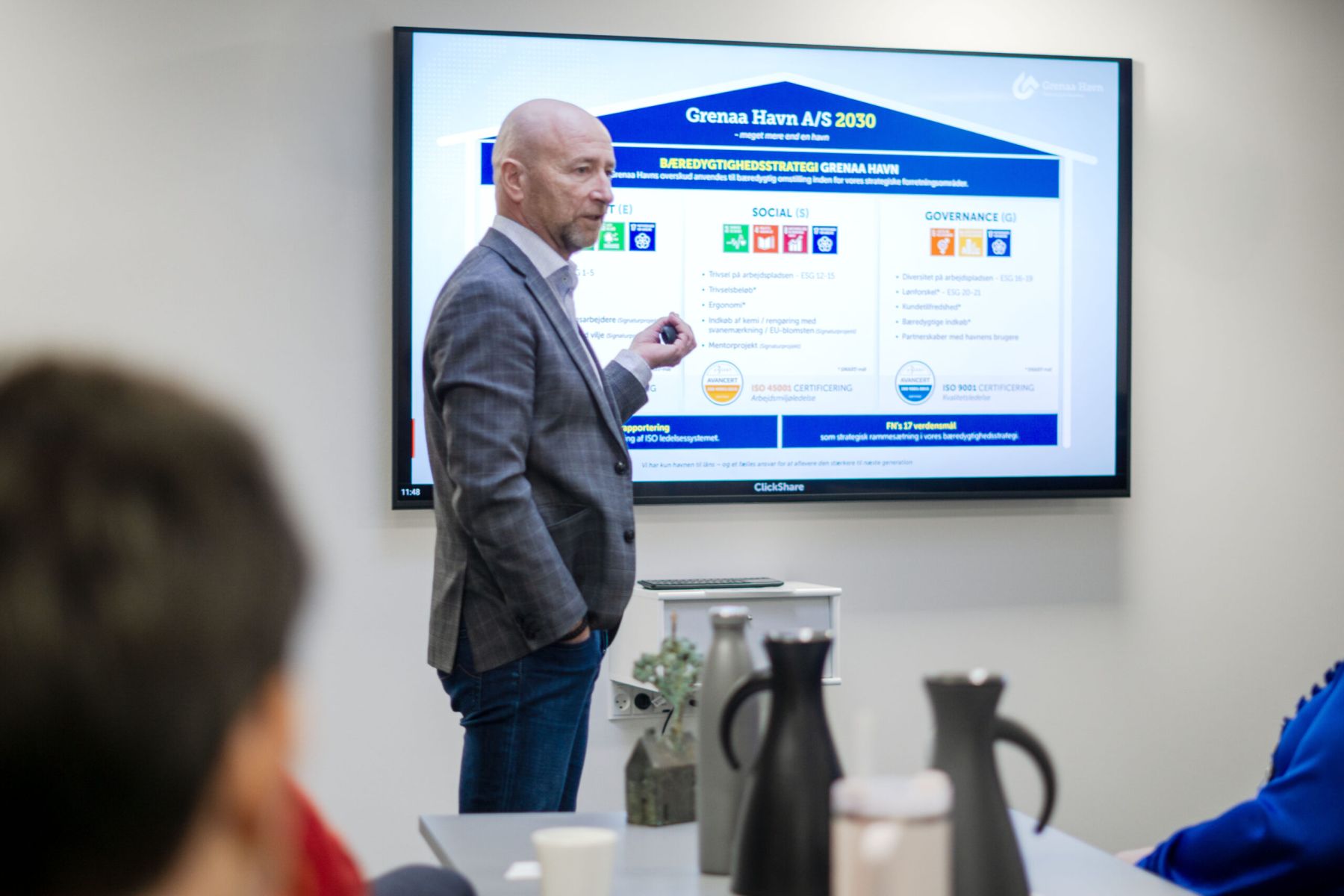



WithStrategy 2030, Port of Grenaa is setting Port of Grenaa clear course for the port's future – a course based on responsibility, cooperation, and a strong desire to deliver a stronger port in 2030.
"Our vision is to continue to be a port that is known for being professional and flexible in our collaboration with customers and suppliers. It is not our ambition to be the largest, but rather the best within our business areas. At the same time, we have an ambitious goal of strengthening our role as a central beacon for business and community development for the benefit of companies and citizens in Norddjurs Municipality,"says CEO Henrik Carstensen.
With Strategy 2030, Grenaa Port will therefore maintain its focus on being a strategic alliance partner for customers and partners.
“We recognize that we have both a significant responsibility and a significant opportunity to contribute even more to the success of our partners’ businesses – locally, regionally, nationally, and internationally,”says Henrik Carstensen.
The strategy also marks an increased focus on Grenaa Port's role as a regional powerhouse that creates growth and business development in Djursland. The ambition is to remain a leader in bulk, recycling, resource handling, and offshore wind.
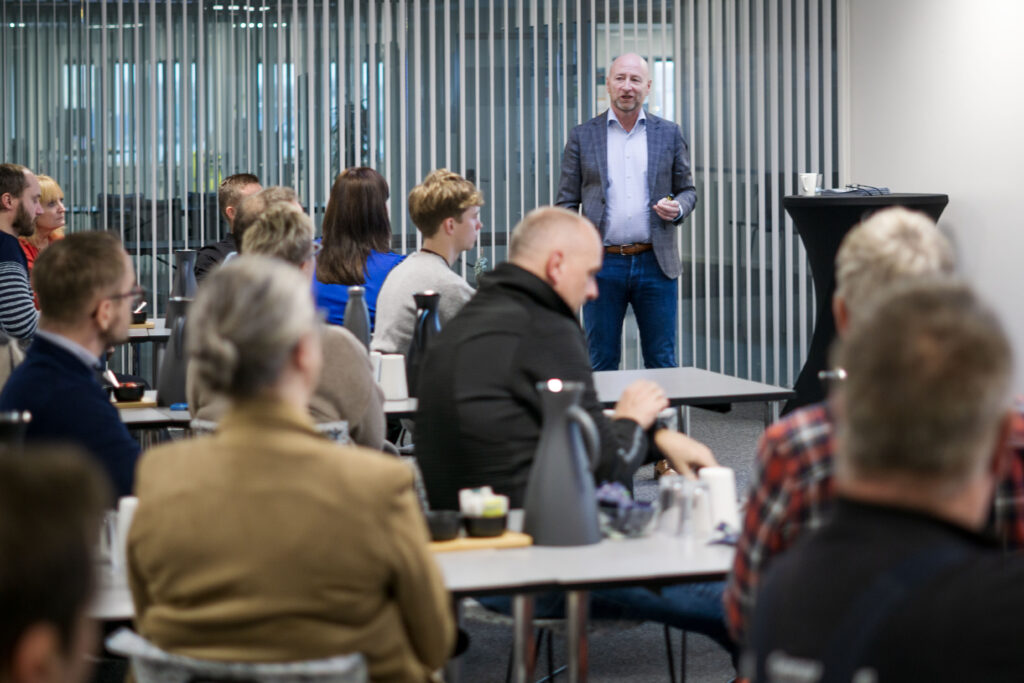
A responsibility that extends far beyond the port area
Strategy 2030, which was approved by Port of Grenaa Board of Directors Port of Grenaa November 2025, covers the Port of Grenaa, the Port of Anholt, and the South Port. Central to the strategy is the clarification that the Port of Grenaa assumes responsibility that extends far beyond the port area itself.
“The port plays a central role in business development, jobs, and the local community. We want to be a modern, attractive, and safe workplace—but also a company that takes social responsibility seriously, both for young people entering the labor market and for local associations and cultural life,”says Henrik Carstensen.
For example, Grenaa Port will continue to contribute to educating the workforce of the future and maintain its involvement in local initiatives, community life, and cultural activities—including theLiv på Sydhavnen (Lifein South Harbor) project and educational initiatives such asUngeløftet(The Youth Pledge).
Green responsibility and sustainable business development
Sustainability is a fundamental element of Strategy 2030. During the period 2020–2025, Grenaa Port has worked purposefully and ambitiously on green transition – work that will continue towards 2030.
“This is one of the reasons why 10 percent of Grenaa Port’s profits are used for sustainable transition within the port’s business areas. The ambition is not only to pass on the port, but to hand it over in better condition than when we took over responsibility for it. Achieving this goal requires constant effort,”says Henrik Carstensen.
Grenaa Port was founded in 1812 and has played a central role for more than 200 years. Strategy 2030 aims to ensure that the port remains strong for the next 200 years – based on sound business practices, green transition, and responsible development.
More than a port
With Strategy 2030, Grenaa Port is clearly positioning itself asmuch more than just a port. The port is a regional powerhouse that:
- creates growth and business development in Djursland
- supports customers and partners locally, regionally, nationally, and internationally
- actively working to improve infrastructure – both on land and at sea
- has ambitions to be a leader in bulk, recycling & resource handling, and offshore wind
At the same time, Grenaa Port will work purposefully in the coming years to develop Sydhavnen and Anholt as attractive destinations for both local communities and tourists.
“Grenaa Port is undergoing positive development. We are continuing to build on this, but with Strategy 2030 we are also setting an ambitious and responsible course for the future,”says Henrik Carstensen.