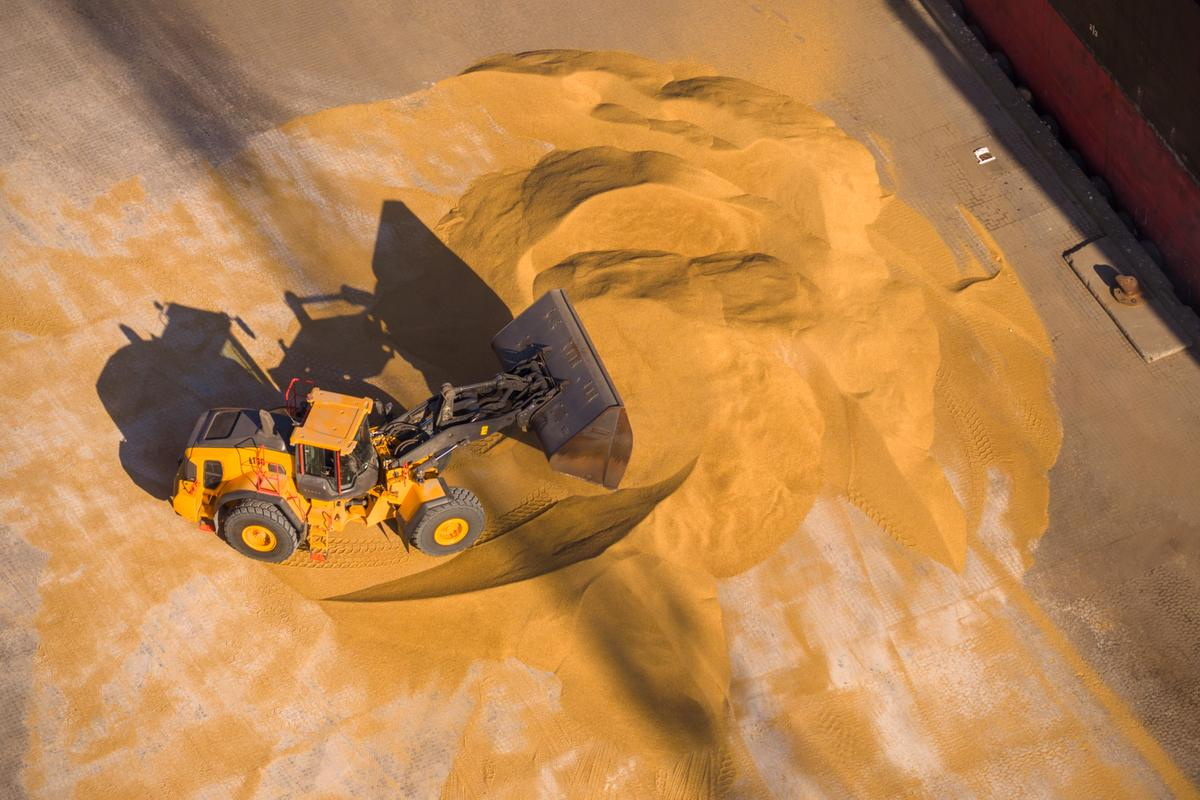


With more than ten years of experience in the biomass sector, the Port of Grenaa has evolved from handling individual projects to becoming an established hub with stable cargo flows and long-term customer relationships. New investments in storage capacity and infrastructure are intended to support this continued development.
The growing demand for sustainable fuels has put biomass on the agenda.
At the Port of Grenaa, biomass has been part of the business for more than a decade, and the port has continuously expanded its role in the handling and storage of biomass.
“Biomass has always been part of our DNA. But in recent years, it has evolved from being more project-based to becoming one of the cornerstones of our bulk business,” says Theis Gisselbæk, CCO at the Port of Grenaa.
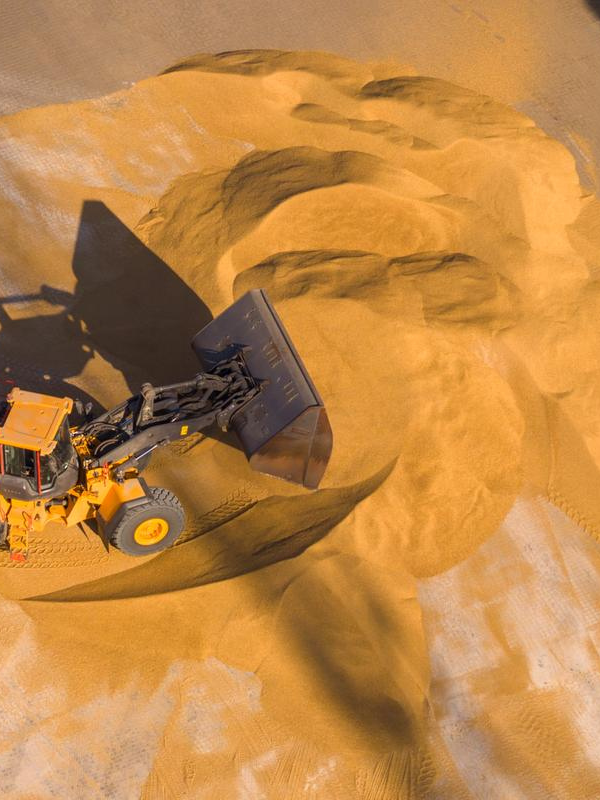
Today, the port handles significant volumes of biomass, primarily wood pellets and wood chips, and serves as a hub for redistribution to Scandinavia and the Baltic states. At the same time, the port is seeing growing interest from related sectors, including the biogas industry.

From project-based assignments to steady freight flows
In the past, biomass at the Port of Grenaa was handled primarily as one-off, project-based tasks. That has changed.
Today, the port has achieved what Theis Gisselbæk describes as a healthy level of activity, with stable cargo flows and long-standing partnerships with a relatively small group of major customers.
These developments have made it possible to optimize operations and invest in infrastructure specifically designed for handling biomass.
In recent years, the Port of Grenaa has made significant investments in warehousing facilities, handling equipment, and logistics solutions, which have improved both efficiency and operational reliability.
“These investments enable us to handle larger volumes more efficiently. At the same time, we maintain the flexibility needed in a market that continues to evolve,” says Theis Gisselbæk.
Expanded storage capacity strengthens the port's role as a hub
A key element of the Port of Grenaa’s strategy is the expansion of its storage capacity.
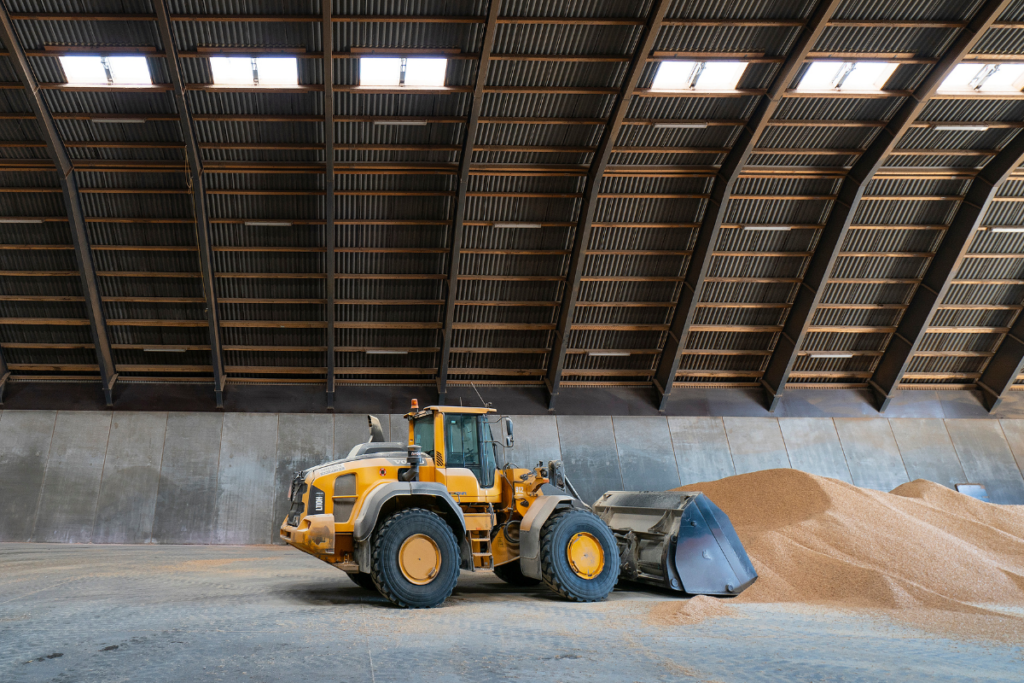
The port recently completed a new warehouse dedicated to biomass and is currently building two more warehouses.
The new facilities will be part of a broader hub function, where goods are not only imported but also stored and distributed further.
“The new warehouses will support our role as a biomass hub in Scandinavia and the Baltic States. We are seeing growing demand for transshipment solutions, where goods arrive by ship, are stored, and then distributed to individual plants, either by ship or other modes of transport.”
The Port of Grenaa is also exploring opportunities to expand with additional paved areas, including facilities for the storage and handling of wood chips.
The development is intended to support the port's ability to meet customers' future needs for storage capacity and flexible logistics solutions.
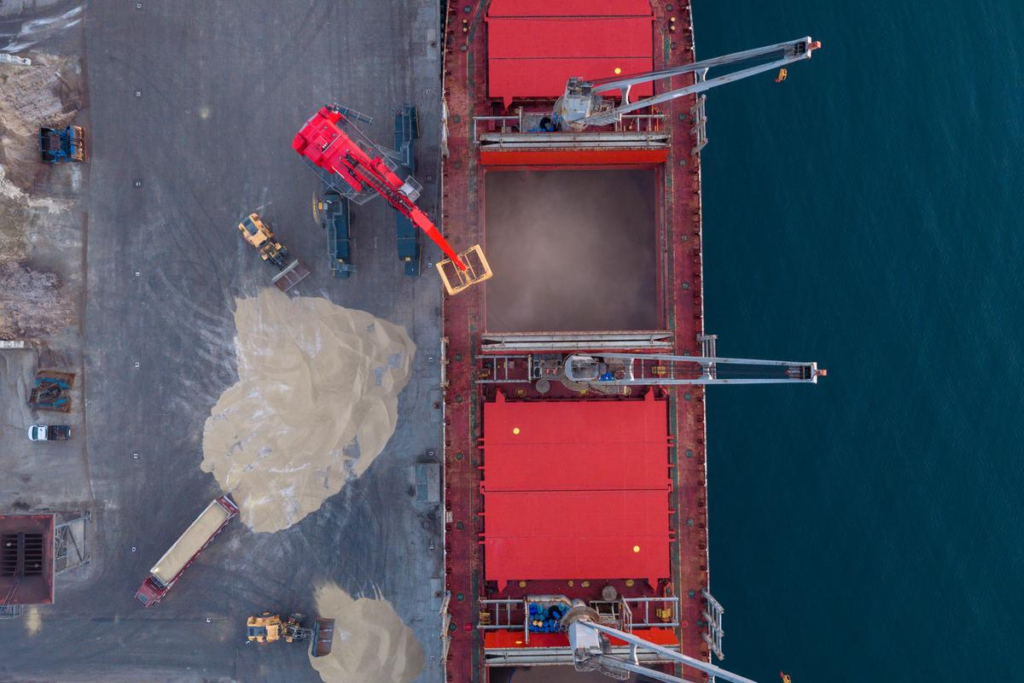
New products place different demands on handling
Although wood pellets and wood chips continue to dominate, the biomass market is evolving.
New raw materials, such as pellets made from sunflower hulls and cashew shells, are becoming part of the supply chain, in part due to changes in availability and prices.
“The new products may require different handling procedures and, in some cases, additional environmental approvals. We take this into account when designing and building our warehouses so that we are prepared for future types of goods,” says Theis Gisselbæk.
It is precisely this approach that will enable the Port of Grenaa to continue adapting to a market in which both the regulatory framework and customer needs are evolving.
Building on many years of experience with bulk
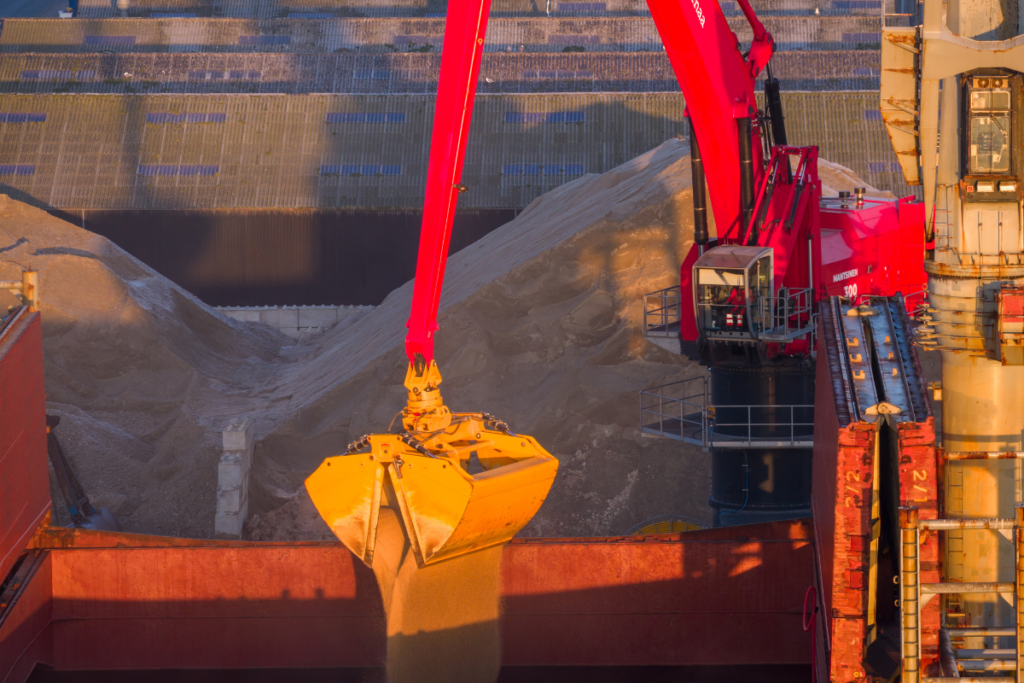
The development of the biomass business is based on the Port of Grenaa’s many years of experience in handling dry bulk.
Over the years, the port has handled significant volumes of various types of bulk cargo and developed strong expertise in cargo handling, storage, and logistics.
Modern equipment, efficient transportation links to the hinterland, and a focus on efficient operations form the foundation of today’s operations.
These capabilities can also be applied to biomass and other energy-related cargo types, which often have similar logistical requirements.
“As a port, we are seeing overall growth in bulk volumes, and biomass accounts for an increasing share. Our experience enables us to increase capacity efficiently while maintaining a high level of service,” says Theis Gisselbæk.
Facts: Biomass at the Port of Grenaa
Primary biomass products: Wood pellets and wood chips, as well as smaller quantities of other wood-based products and byproducts.
Primary markets: Primarily Denmark, but also, to a lesser extent, neighboring countries.
Origin of the biomass: The biomass comes from a variety of markets, including the Baltic States, Scandinavia, and other parts of Europe, as well as North and South America.
The port’s role as a hub: Import, storage, and redistribution supported by flexible facilities for the handling and storage of dry bulk.
New storage capacity: Two new bulk storage facilities are under construction at the Grenaa Bulk Terminal. Each facility will cover just under 2,000 m² and have a capacity of approximately 10,000 metric tons of wood pellets.
Warehouse facilities: The new warehouses will comply with current emergency preparedness requirements and will be equipped with temperature monitoring systems, among other features.
Future expansions: The Port of Grenaa is working on the development of additional port areas and infrastructure, including plans for more paved areas and a dedicated area for the storage and handling of wood chips.