Author: The Agency

srcset="/wp-content/uploads/yootheme/cache/82/20230227-henrik-bent_CSP3394-1200px-823da090.jpg

Record turnover in Port of Grenaa

For the fourth year in a row, and despite international unrest, Port of Grenaa has achieved a record-breaking turnover.
It was therefore an extremely satisfied chairman of the board who at today's general meeting was able to present a turnover of DKK 72.2 million and a net profit of approximately DKK 11 million for the 2022 financial year in Port of Grenaa.

"Naturally, I, and the rest of the Board, take a very positive view of this result. Especially in light of the fact that 2022 was a difficult year in many ways, partly due to the unfortunate war in Ukraine, which caused energy and fuel prices to rise. And on top of that, an inflation rate that we have not seen higher since 1982," says Bent Hansen, Chairman of the Board of Port of Grenaa.

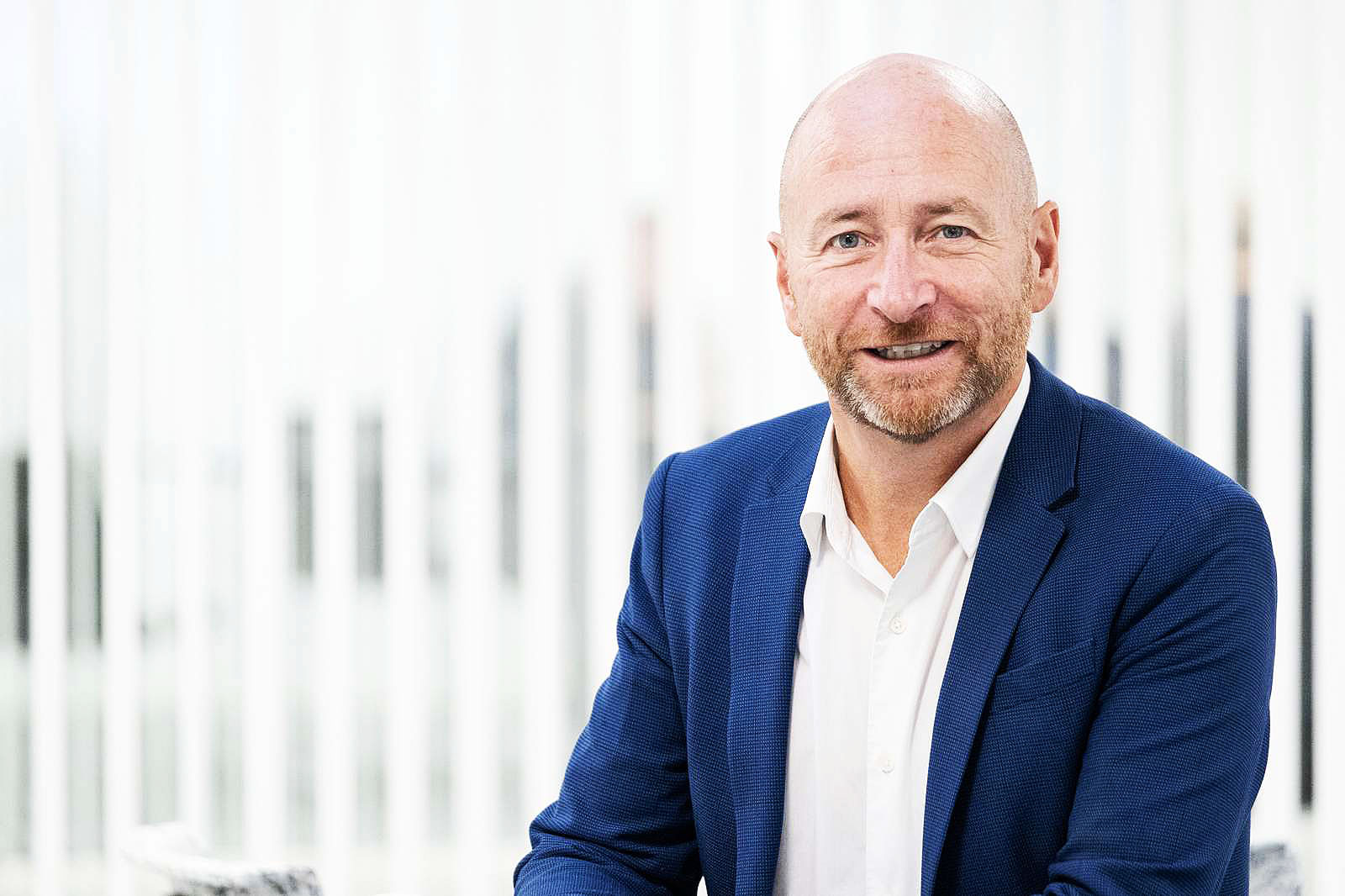
Henrik Carstensen, CEO of Port of Grenaa, is also very satisfied with this year's turnover and results. He points to one thing in particular that has been special for 2022.

"Last year was particularly notable in the bulk sector. Especially biomass made up a very large part of the bulk cargo that came across the quay. This was a result of the sudden energy crisis, which meant that raw material depots for the Danish heating plants had to be secured in a short time," says Henrik Carstensen.

Sustainable and climate-proof

Port of Grenaa, like most companies, is in a sustainable transition. One of the company's climate targets is to increase the share of hybrid or electric cars in the company to at least 50 % by 2025. This target was already achieved by the end of 2022, with 66 % of the fleet being hybrid or electric.

Electric cars at Port of Grenaa
As of January 2023, the Port of Grenaa's car fleet in operation is based on electric cars running on 100% green electricity.

"In the past year, we have had an extra focus on the green transition. Sustainability and green transition is not something we just talk about. We do something about it," Bent Hansen emphasizes and continues: "In the Port of Grenaa's sustainability strategy, we have agreed that we will spend 10% of the port's profits on sustainable transition within our strategic focus areas. We are living up to that goal, also this year."

Certifications and infrastructure

Port of Grenaa has focused a great deal of attention on obtaining certification in the three ISO areas of quality, environmental and occupational health and safety management. This is one of the areas where extra resources have been used during the year.
Another recurring point is the constant work to draw attention to the infrastructure on Djursland.

"Wherever we have the opportunity, we try to influence opinion leaders and politicians so that we can bring forward the construction of the 2+1 road to the Feldballe junction and the bypasses at Trustrup and Tirstrup. But if the infrastructure is to make sense and significantly improve safety, the A15 must be made into a 2+1 road all the way to Grenaa. Anything else makes no sense at all," says Henrik Carstensen, CEO, Port of Grenaa.

New Board of Directors

Port of Grenaa welcomes a new board member, Daniel Isak Dallerup, who is nominated by the Central Organization of the Trade Union Movement East Jutland.

At the inaugural meeting of the Board of Directors, which was held after the General Assembly, Bent Hansen was appointed to continue as Chairman and Laura Hay Uggla will also continue as Vice-Chairman.

In addition to the above mentioned, the board consists of: Anette Ruby Liebe, Benny Hammer, Jens Meilvang, Jess Abildskou and Lene S. Sørensen.

srcset="https://grenaahavn.dk/index.php?yootheme=cache/e4/20221013-henrik-carstensen_DSF1120-1600px-e46ff49c.jpg&src=wp-content/uploads/20221013-henrik-carstensen_DSF1120-1600px.jpg&thumbnail=768,512,&hash=e1f46757

Challenges threaten Danish ports

This is an opinion piece written by Henrik Carstensen, CEO Port of Grenaa and board member of Danish Ports. The article was published in Avisen Danmark on April 8, 2023.

The future is not heavy long-distance transportation by road, the future belongs to ports and the sea when it comes to transporting goods.

Danish ports are critical infrastructure and important for the country's economy and business. Ports play a central and important role in the trade and transportation of goods, and their efficiency and safety are crucial to the country's competitiveness. In addition, maritime transport is far less environmentally damaging than road transport.

But if ports are prevented from offering proper conditions, they will not be able to perform the logistics tasks that are the DNA of ports - and this will not be beneficial for the environment, business or employment. That is why we need to address some of the pressing challenges facing ports.

Challenge number one - Ports need deeper channels

The state-owned shipping lanes that ship traffic follows into Danish ports are in urgent need of deepening. The ships that call at the ports are now huge and carry all kinds of cargo, from wood chips, salt, scrap iron for recycling and the huge turbine parts used in the construction of offshore wind farms. The trend is for ships to keep getting bigger, because it's efficient and it's climate-friendly.

If the state shipping lanes are not deepened, Port of Grenaa among others, can look into a future where ships sail past us and find new ports with deeper and safer sailing conditions.
There are plenty of foreign ports waiting in the wings, ready to overtake us. We cannot stand by and watch in silence.

Therefore, as the responsible port director, I am shouting the alarm so that the responsible politicians can act in time before it is too late. Because it is about development and it is about jobs. The infrastructure for the ports must be in place - in width and depth - also on the water and this is a political responsibility.

Challenge number two - Long processing times threaten green transition

There are examples of applications for the erection of wind turbines that have taken more than three years to process. Three (3) years of processing. This is quite unreasonable for all parties involved.

With the current ambitious plan for Denmark to achieve a 70% reduction in CO2 emissions by 2030 and be climate neutral by 2050, it is necessary that the planned offshore wind farms are realized as soon as possible. There is no time for long processing times - neither in the application phase nor subsequently in the appeal bodies.

If we are to have the slightest chance of getting through the climate and energy crisis, the processing times must be significantly reduced so that Denmark and Europe can free themselves from fossil fuels and become climate neutral in 2050.
Fortunately, this has been realized by the European Commission, which is currently negotiating a proposal for common European rules on maximum processing times for green energy initiatives. We believe and hope that this will be negotiated, so that Europe can get started with the expansion of near- and offshore wind farms in the waters around us.

Get started - Danish ports are ready

Danish ports are scrambling to provide all those involved in the wind turbine industry with berths for storage, shipping, construction and maintenance of near- and offshore wind farms. We would love to help, but right now there is hesitation and everyone is waiting to see if the Danish wind adventure can continue. In the worst case scenario, it could turn into a long nose instead.

So, dear politicians. Get started, the Danish ports are ready - all that is missing are the permits to establish the wind farms, so that we can take a giant step even further away from the climate catastrophe and Russian gas and towards climate-friendly, green energy self-sufficiency.
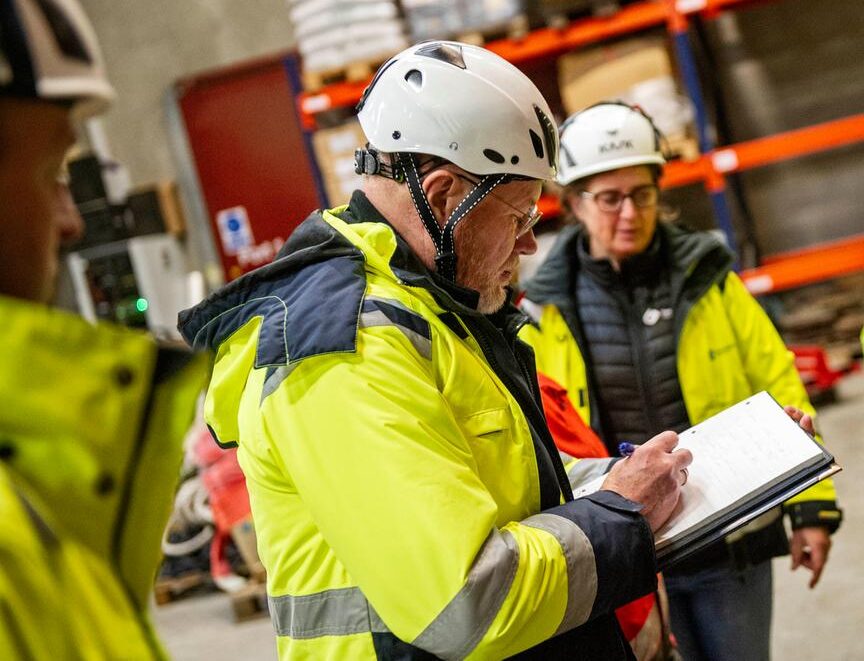
Persons on site at Port of Grenaa. Port of Grenaa iso 9001 14001 45001

Port of Grenaa - now in the super league for Danish ports

Once again Port of Grenaa makes a positive impact. The port has been awarded the blue stamp in three important ISO standards and is thus in a top position to continue the positive development the port has been in since 2015. Now the port has paper that the quality is top in quality, environment and working environment. This is good for customers, the environment and, not least, for employees.

It was a satisfied QHSE manager at Port of Grenaa who achieved all three certifications. This followed two years of implementation of the three management systems in quality, environment and occupational health and safety. By becoming certified, Port of Grenaa gains a number of benefits. These include higher quality, increased efficiency, better risk management and more satisfied customers and employees.

Guarantee of quality

The run-up to ISO certification began in early 2021. At the time, Port of Grenaa had enjoyed record sales for several consecutive years, and had a natural desire to become ISO accredited. Natural because several of the customers were large national and international companies where the requirement would be to demonstrate quality and management in the areas of quality, environment and occupational health and safety if the collaboration was to continue. So it was natural to 'get on paper' that things were in order at the port.

"It wasn't that we weren't in control of our business. We were. But with a growing organisation, a lot more employees and a steadily increasing turnover, now was the time to get started," says Mette Klit, QHSE manager at Port of Grenaa about the choice of time to initiate the certification.
She also emphasises that the three management systems are important tools, as they place demands on Port of Grenaa as an organisation and business partner.

"The requirements placed on us through the certifications are to ensure that we always perform at our best and always strive to set high standards for our norms, standards and values,"
Mette Klit - QHSE Manager, Port of Grenaa

Get a safer workplace

Henrik Carstensen, CEO of Port of Grenaa is also confident that the three certifications will benefit the port's customers and employees.
"Several of our customers are among the market leaders in their field. For them it is a requirement that their partners are certified according to ISO standards in quality, environment and working environment. Therefore, it is of course important for Port of Grenaa that we have the certifications, so that we can retain our customers, but just as much that we can attract new ones," says Henrik Carstensen. He points out that it will also lead to a safer workplace, especially for the employees who move around the port areas. Those who load and unload the ships and operate the heavy machinery on a daily basis.

"Especially for the employees working at the port itself, it will mean a safer everyday life. That's because every little mistake or risk of mistake will be reported in a system so we can identify situations and places that could be potentially dangerous - and then do something about it in the form of an action plan," says Henrik Carstensen.

Having achieved the three ISO standards, Port of Grenaa will now move on to optimising and consolidating processes so that the organisation is ready for the next follow-up audit in 2024.

Read more about QHSE and certifications

Facts about the three ISO standards:

ISO 9001: This standard describes the requirements for a quality management system that helps organisations deliver products and services that meet customer needs and expectations.

ISO 14001: This standard describes the requirements for an environmental management system that helps organisations identify and reduce their environmental impacts and meet regulatory requirements.

ISO 45001: This standard describes the requirements for an occupational health and safety management system that helps organisations create a safe and healthy working environment for their employees and other stakeholders.

Theis Gisselbaek and Henrik Carstensen, Port of Grenaa

Port of Grenaa will be involved when wind turbines are recycled

Grenaa and Port of Grenaa may become one of several hotspots for reuse, recycling and upcycling of wind turbines when existing wind turbines are dismantled and removed from their original location.

This is clear after Port of Grenaa has been involved in four years of developing collaboration with other knowledge-intensive European partners, including several universities, all of whom see a future industry established in the reuse and recycling of offshore wind turbines in particular.

For the past four years, Port of Grenaa has participated in DecomTools, an EU project that has been working on the possibilities to reuse and recycle mainly offshore wind turbines. The aim has been to gather experience and knowledge so that the industry can reduce the cost of decommissioning by 20% and reduce the environmental impact by 25%.

An area for specialists

Within the next ten years, there will be many obsolete wind turbines to be dismantled across Europe. Wind turbines have a lifespan of around 25 years before they need to be taken down or, alternatively, 'life extended' with a thorough refurbishment. At Port of Grenaa there are already established companies specialising in reuse and recycling.

Port of Grenaa are experts in logistics, an area that is important when hundreds of wind turbines have to be transported ashore for recycling. The picture is from a previous project, where eight turbines were totally refurbished and returned to service.

"Port of Grenaa is in a unique position to manage and recycle wind turbines in a sustainable way. We have a well-developed network of recycling companies and we are experts in logistics ourselves, which enables us to handle this in an efficient way," says Henrik Carstensen, CEO of Port of Grenaa and continues, "We are proud to be part of this future industry and work towards a sustainable solution for wind turbines. We look forward to offering our experience and expertise in this process."

What to do with used wind turbines?

Specifically, there are several ways to use the disused wind turbines. It can be recycling, of the parts that are in good condition. These parts can be used in other wind turbines. Metal can be remelted, the blades can be made into granules or used for something else entirely. Both needs and ideas are available, and Port of Grenaa has expert experience in logistics and a network of current customers who have extensive experience in the whole recycling idea.

Wind turbine blades can be recycled for many things. Here the granules are used as an 'ingredient' in various plates

"We see great potential in reusing and recycling wind turbines. This is not only good for the environment, but also for business, as it can reduce decommissioning costs and increase the possibilities to recycle individual parts," says Theis Gisselbæk, CCO of Port of Grenaa.

"There are already companies on Port of Grenaa that scrap wind turbines for reuse and recycling. What we are waiting for is that considerably more wind turbines are dismantled so that we can get started and run the project on a large scale. We have both the space and the expertise locally. So we are ready," concludes Theis Gisselbæk, stressing that Port of Grenaa would like to engage in dialogue with companies already working with, or seeking knowledge of, wind turbine recycling and reuse.

Group portrait three persons. Ferry service secured to 2034 from Grenaa

Ferry services to and from Sweden secured until 2034

Port of Grenaa and Stena Line have signed a new service agreement, which runs until the end of 2034, and the agreement is a good extension of the partnership agreement 'Kattegat Alliance' between Norddjurs Municipality and Halmstad Municipality. The agreement ensures a stable and regular ferry service between East Jutland and southern Sweden, and Stena Line therefore has the aim and hope that the number of tourists and trucks on the route will increase in the coming years.

New deal is a win for the environment

Since 1 February 2020, Stena Lines ferry has been sailing between the cities of Grenaa and Halmstad. With the new service agreement, ferry services between the two regions are guaranteed until 2034. Among other things, this means that hauliers and freight forwarders can be sure that their trucks can take a shortcut across the Kattegat and are not dependent on driving across Storebælt and the Øresund Bridge to get to and from Sweden.

"We are pleased that with this multi-year agreement with Stena Line we can offer an alternative to the long route across Funen and Zealand. If we can get even more trucks to Sweden and Denmark via waterway, it will be good for the environment and mean a significant reduction in CO2 emissions. It has been important to us that the agreement extends over many years, so that the transport industry has the opportunity to plan their route network over a multi-year period," says CEO Henrik Carstensen, Port of Grenaa.

Bringing growth to the Kattegat region

The mayor of Norddjurs municipality is also enthusiastic about the new agreement, which he says will provide optimal conditions for stimulating growth in tourism and business in the Kattegat region.

"This is a very good agreement for Norddjurs Municipality and the whole of East Jutland. The agreement between Port of Grenaa and Stena Line guarantees that there will be a stable and good ferry service for the next many years. A ferry service that binds the Kattegat region together. It is the basis for us to develop the region together with our partners in the Kattegat Alliance, so that we create the best growth conditions for the development of business and tourism on both sides of the Kattegat", says Kasper Bjerregaard, Mayor of Norddjurs Municipality, and continues:

"The agreement underlines the importance of expanding the 2 plus 1 road network between Grenaa and Aarhus, and that the infrastructure settlement 'Denmark Forward - Infrastructure Plan 2035' is made a reality."

Environmentally friendly transport option

"At Stena Line we are delighted to enter into a long-term agreement on the ferry service between Grenaa and Halmstad and thus continue to be able to offer our freight customers and passengers an efficient and environmentally friendly transport option across the Kattegat. We look forward to continuing the good cooperation with Port of Grenaa and Norddjurs Municipality for many years to come", says Kim Lindholm, Operations Manager, Port and Terminals Stena Line ".

Facts:

  • The ferry connection between Grenaa and Halmstad has two daily departures.

  • There has been a ferry connection between Grenaa and Sweden for about 65 years. Stena Line has operated the service for about 40 years.

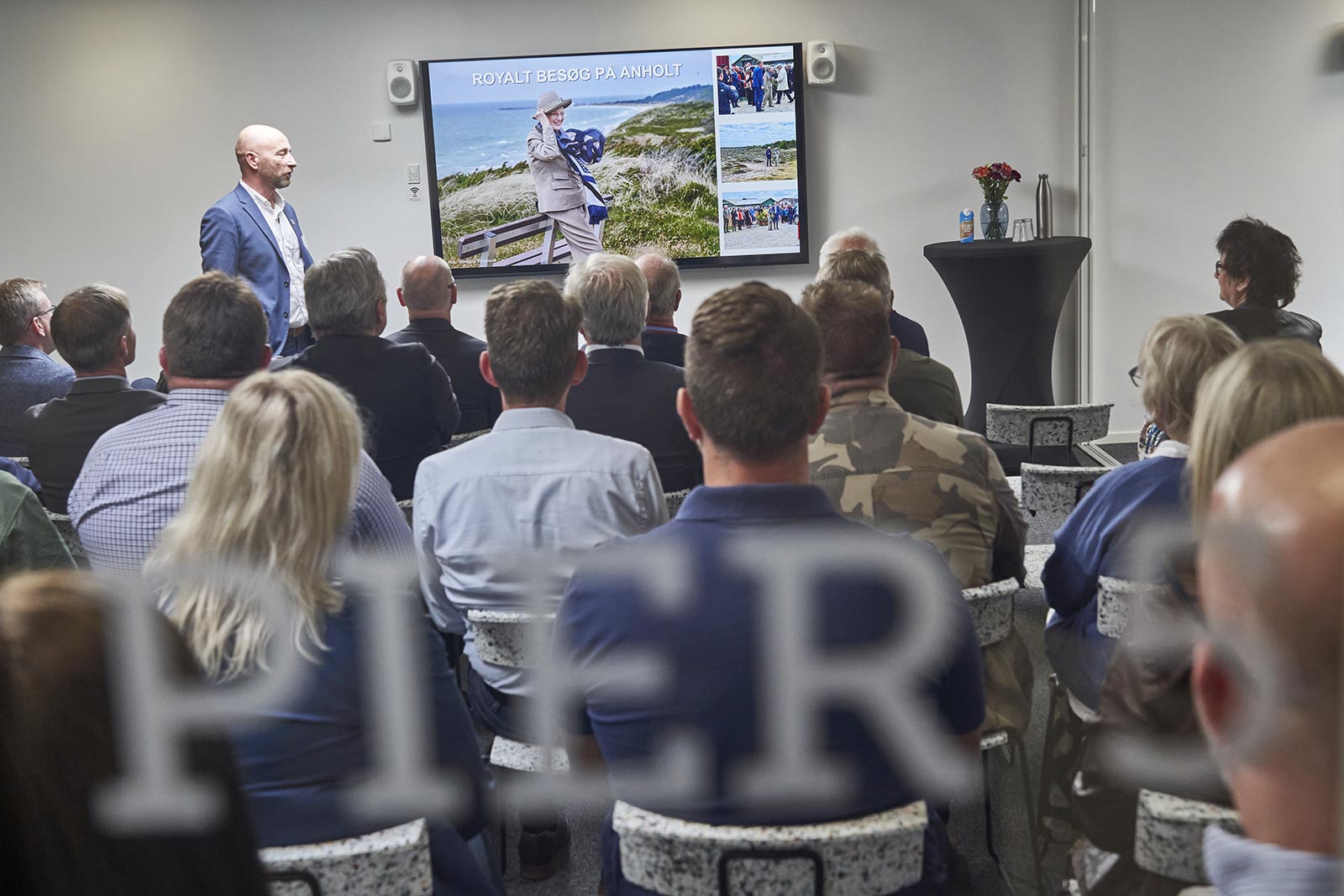
conference room with participants

New and upgraded meeting facilities

We have completed another phase of the modernisation of our Port Centre at Port of Grenaa. We celebrated this at the beginning of the month with a mini-conference focusing on sustainability, climate and the UN's Sustainable Development Goals.

Henrik Carstensen, CEO of the Port of Grenaa, told the guests about how we work with sustainability and global goals in our everyday life, and then the guests had the pleasure of an hour's lecture by Christine Feldthaus - known from the TV programmes 'Do you know the type' and 'The guest and the horse'. She covered a number of topics in her talk about the Danes' different approaches to sustainability, focusing primarily on consumption, energy and sustainability.

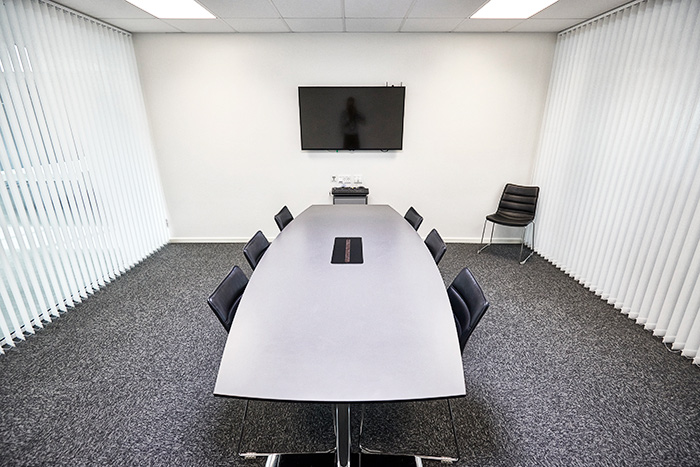
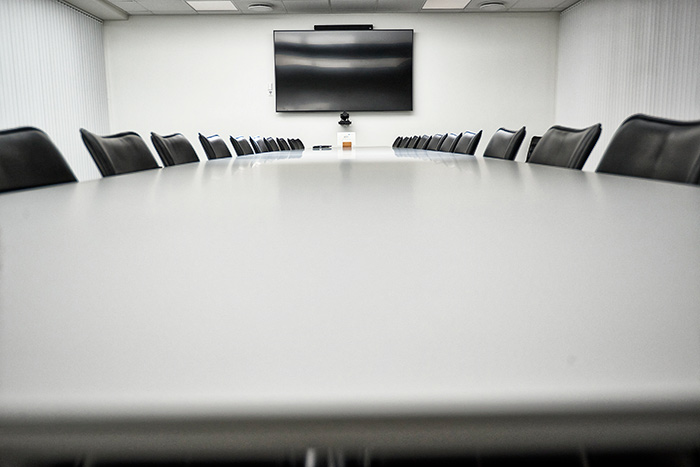
Meeting rooms with space for many people Port of Grenaa

Meeting rooms - maybe something for you?

We want to share our facilities with others, instead of having them sit empty - sharing is sustainable and climate-friendly.

Beautiful modern meeting rooms at Port of Grenaa

Therefore, we offer our customers and partners to rent our premises if you are having an event or holding a meeting in maritime surroundings. You can now do this in our bright and cosy Port Centre in the centre of Port of Grenaa.

New and upgraded meeting facilities at Port of Grenaa

The rooms are bright, friendly and sized to suit most common needs, with IT equipment and a large screen to suit each room.

Click here for more info about our office and meeting rooms for rent

group picture - community across the kattegat with grenaa halland

Community across the Kattegat

Last week we had the great pleasure to welcome the management and board of Hallands Havne, part of the Kattegat Alliance, to Grenaa.

Over the course of a few days, they had to take a closer look at Port of Grenaa, hear about our business and, among other things, meet Mayor Kasper Bjerregaard, Norddjurs Municipality.
The visit was rounded off with a visit to the Kattegat Centre and Stena Recycling A/S respectively.

The Cat Alliance is important for cooperation

The Kattegat Alliance is a collaboration across the Kattegat between Halmstad Municipality and Norddjurs Municipality, made possible by the ferry connection operated by Stena Line. Both municipalities will work closely together to create opportunities for tourism in particular, so that the ports of arrival are seen as more than just a ferry terminal.

The strategy is to make it attractive for ferry passengers to stay in and around the two ports of call, to spot the attractions that exist locally and to make both municipalities an attractive place to do business. In this way, we can jointly create value on both sides of the Kattegat, so that travellers visit more local attractions and have an experience here before moving on.