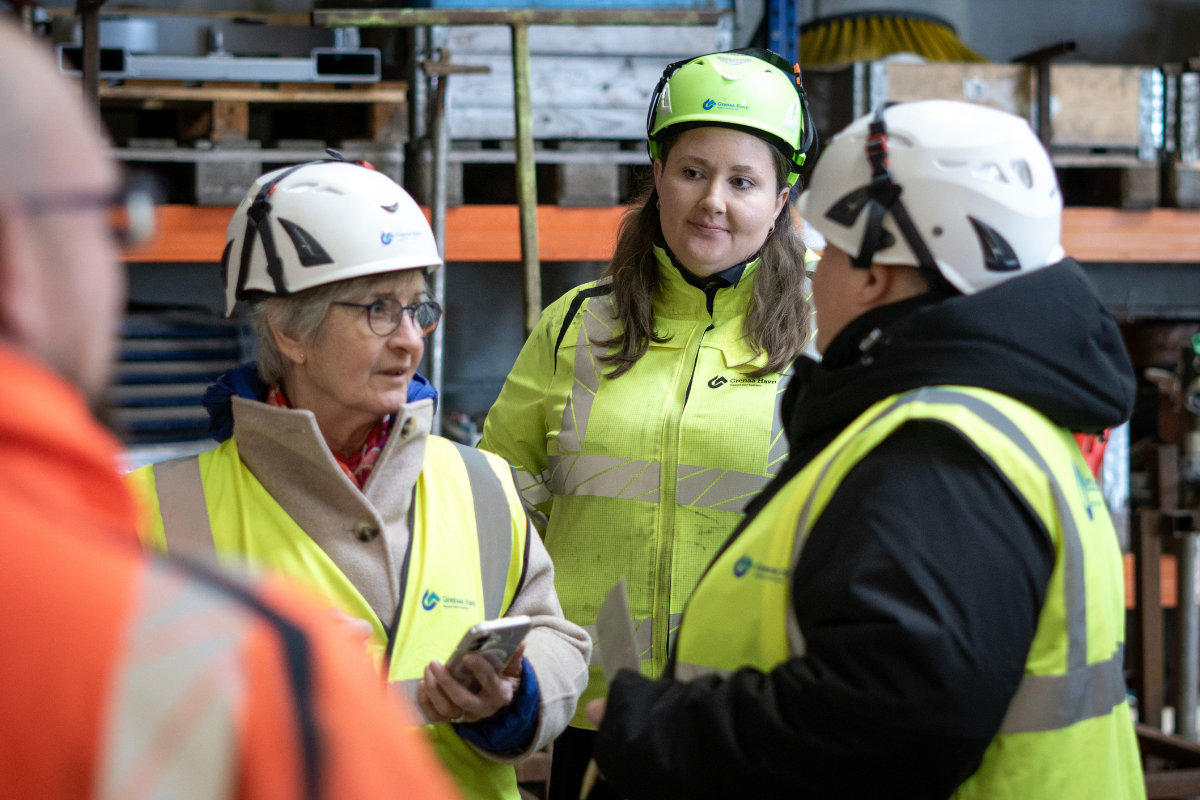
The Port of Grenaa once again welcomed auditors from Avancert – Certification Company, who conducted the annual follow-up audit in connection with the Port of Grenaa’s ISO certifications.
ISO standards are international standards that help companies take a systematic approach to quality, the environment, and occupational health and safety.
The result is positive, and the audit has confirmed that we continue to meet the requirements of our three ISO certifications:
ISO 9001 – Quality
ISO 14001 – Environment
ISO 45001 – Occupational Health and Safety
For the Port of Grenaa, it’s about continuously improving our work processes, reducing our environmental impact, and ensuring a positive and safe work environment for our employees.
“This is a truly excellent result that we can be proud of. These certifications help ensure that we take a systematic approach to quality, the environment, and workplace safety. But it is our employees’ daily efforts that make the difference, which is why this is also a recognition of our collective achievements,” says Mette Klit, CAO at the Port of Grenaa.
Thank you to Lars Ole Møller, Rikke Andersson, and Susanne Jensen from Avancert for a thorough and constructive audit—and thank you to all our employees for their efforts.
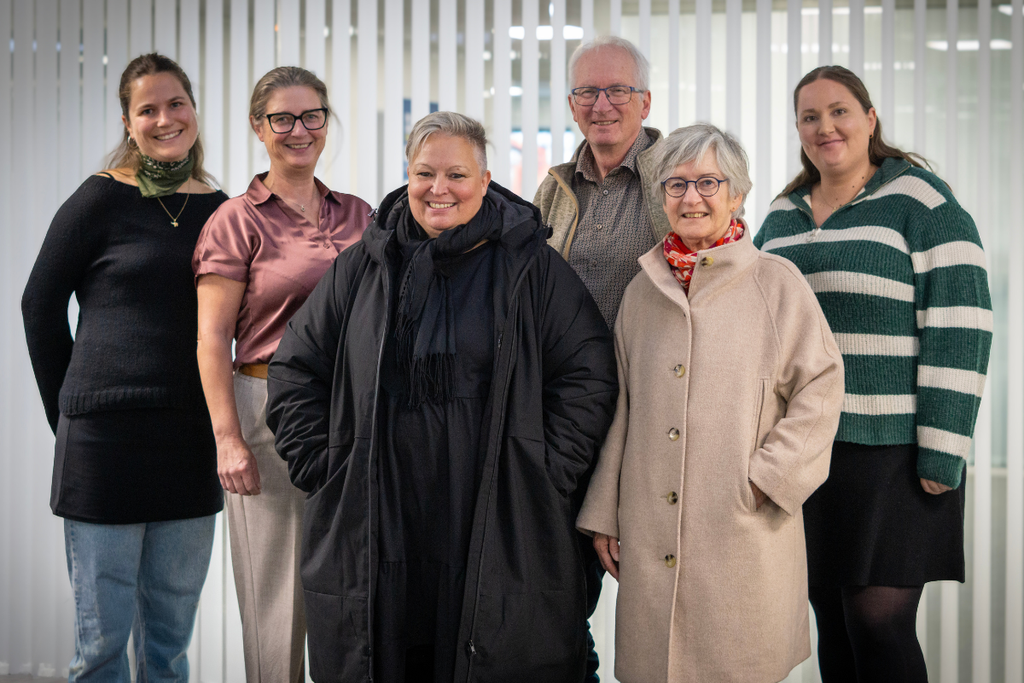
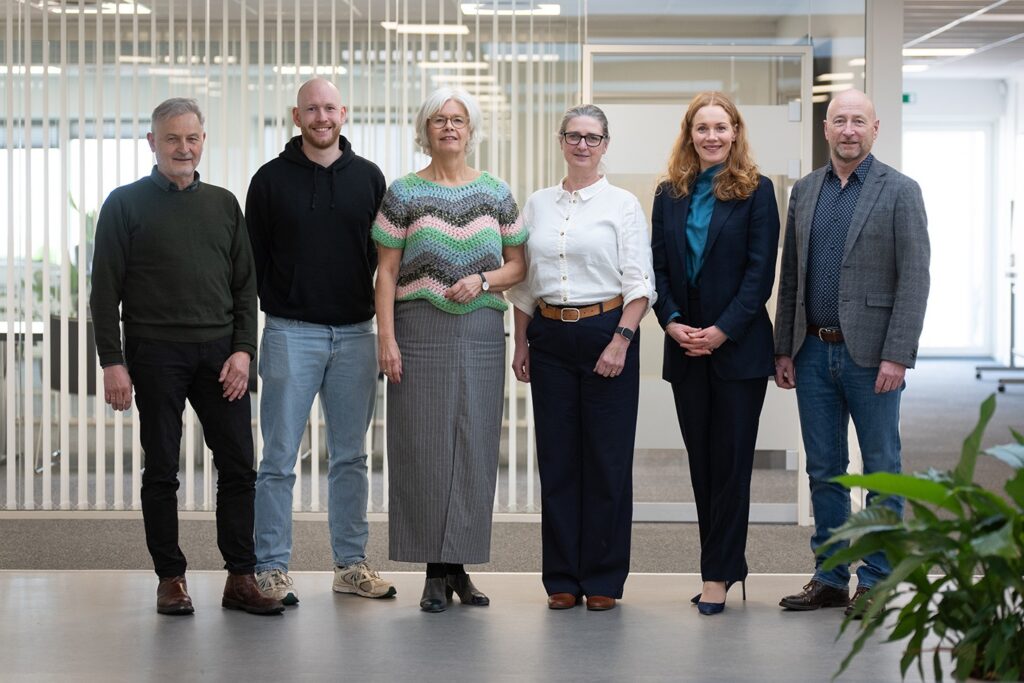
Photo, from left:
Nanna Aare Jensen, administrative trainee at Grenaa Port; Mette Klit, CAO at Grenaa Port; Susanne Jensen, Lars Ole Møller, and Rikke Andersson from Avancert; and Laura Møller, QHSE coordinator at Grenaa Port.
With more than ten years of experience in the biomass sector, the Port of Grenaa has evolved from handling individual projects to becoming an established hub with stable cargo flows and long-term customer relationships. New investments in storage capacity and infrastructure are intended to support this continued development.
The growing demand for sustainable fuels has put biomass on the agenda.
At the Port of Grenaa, biomass has been part of the business for more than a decade, and the port has continuously expanded its role in the handling and storage of biomass.
“Biomass has always been part of our DNA. But in recent years, it has evolved from being more project-based to becoming one of the cornerstones of our bulk business,” says Theis Gisselbæk, CCO at the Port of Grenaa.
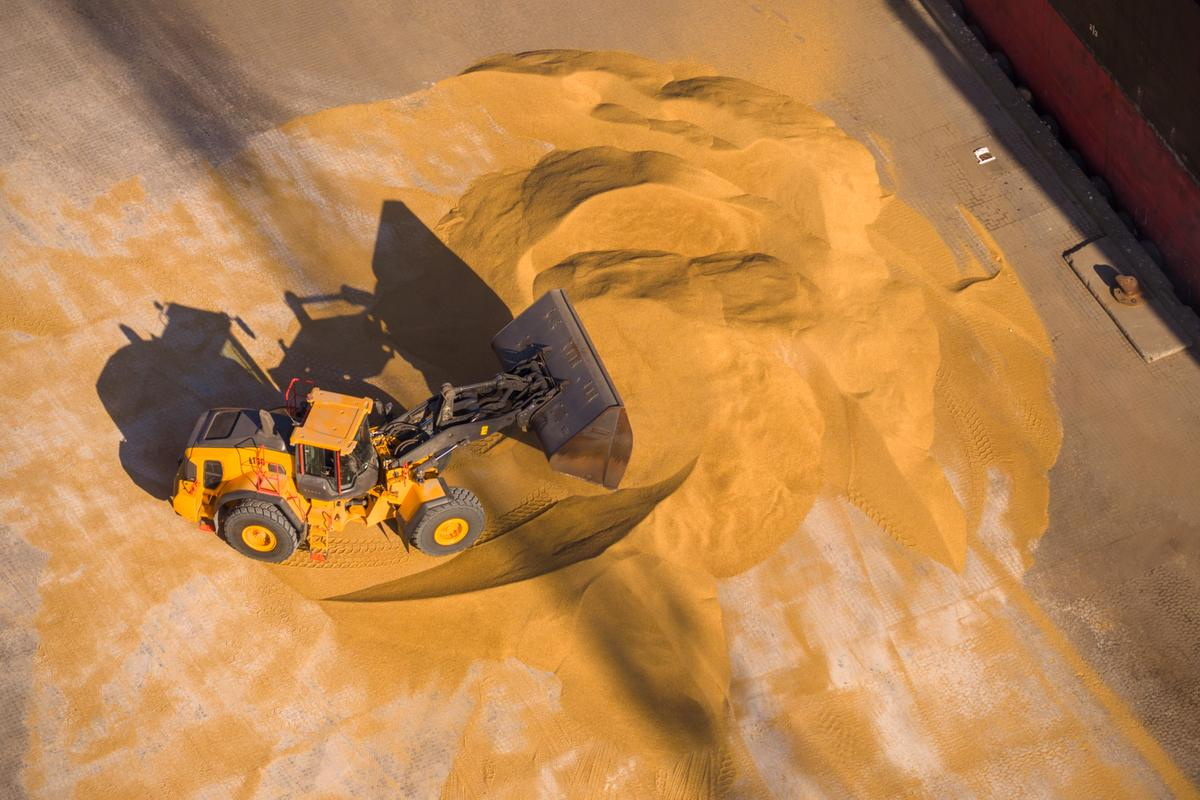
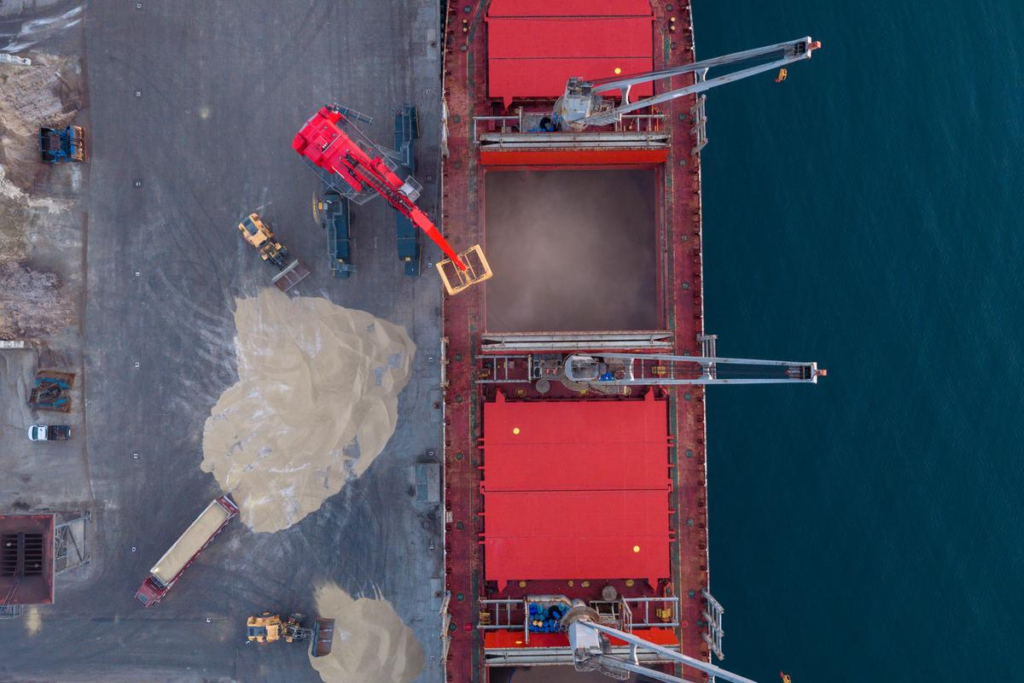
Today, the port handles significant volumes of biomass, primarily wood pellets and wood chips, and serves as a hub for redistribution to Scandinavia and the Baltic states. At the same time, the port is seeing growing interest from related sectors, including the biogas industry.
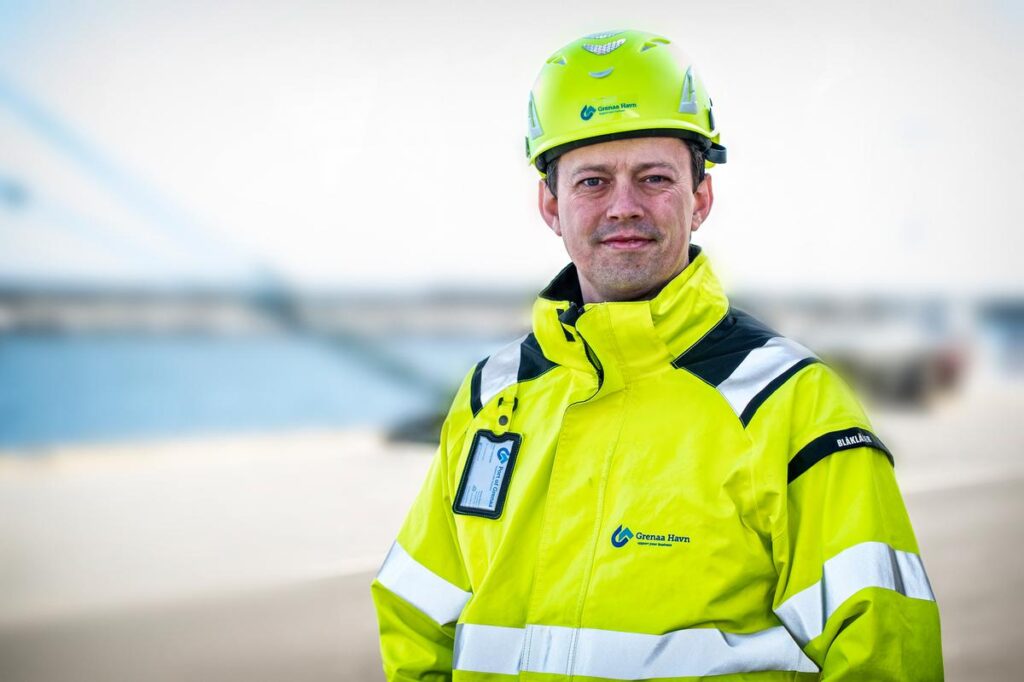
Theis Gisselbæk, CCO, Port of Grenaa.
From project-based assignments to steady freight flows
In the past, biomass at the Port of Grenaa was handled primarily as one-off, project-based tasks. That has changed.
Today, the port has achieved what Theis Gisselbæk describes as a healthy level of activity, with stable cargo flows and long-standing partnerships with a relatively small group of major customers.
These developments have made it possible to optimize operations and invest in infrastructure specifically designed for handling biomass.
In recent years, the Port of Grenaa has made significant investments in warehousing facilities, handling equipment, and logistics solutions, which have improved both efficiency and operational reliability.
“These investments enable us to handle larger volumes more efficiently. At the same time, we maintain the flexibility needed in a market that continues to evolve,” says Theis Gisselbæk.
Expanded storage capacity strengthens the port's role as a hub
A key element of the Port of Grenaa’s strategy is the expansion of its storage capacity.
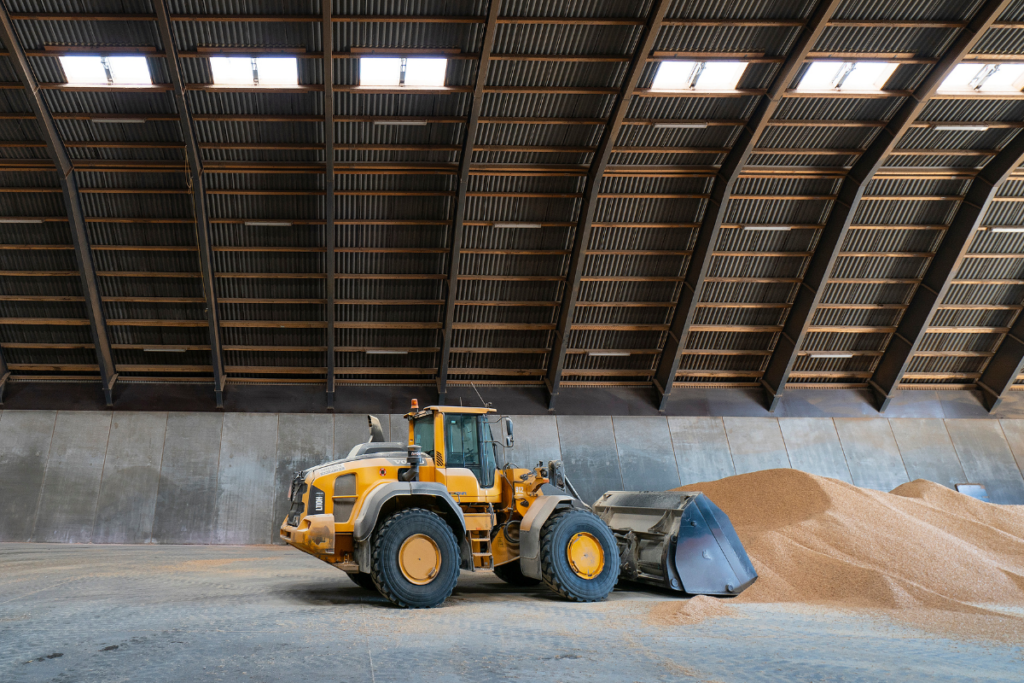
The port recently completed a new warehouse dedicated to biomass and is currently building two more warehouses.
The new facilities will be part of a broader hub function, where goods are not only imported but also stored and distributed further.
“The new warehouses will support our role as a biomass hub in Scandinavia and the Baltic States. We are seeing growing demand for transshipment solutions, where goods arrive by ship, are stored, and then distributed to individual plants, either by ship or other modes of transport.”
The Port of Grenaa is also exploring opportunities to expand with additional paved areas, including facilities for the storage and handling of wood chips.
The development is intended to support the port's ability to meet customers' future needs for storage capacity and flexible logistics solutions.
New products place different demands on handling
Although wood pellets and wood chips continue to dominate, the biomass market is evolving.
New raw materials, such as pellets made from sunflower hulls and cashew shells, are becoming part of the supply chain, in part due to changes in availability and prices.
“The new products may require different handling procedures and, in some cases, additional environmental approvals. We take this into account when designing and building our warehouses so that we are prepared for future types of goods,” says Theis Gisselbæk.
It is precisely this approach that will enable the Port of Grenaa to continue adapting to a market in which both the regulatory framework and customer needs are evolving.
Building on many years of experience with bulk
The development of the biomass business is based on the Port of Grenaa’s many years of experience in handling dry bulk.
Over the years, the port has handled significant volumes of various types of bulk cargo and developed strong expertise in cargo handling, storage, and logistics.
Modern equipment, efficient transportation links to the hinterland, and a focus on efficient operations form the foundation of today’s operations.
These capabilities can also be applied to biomass and other energy-related cargo types, which often have similar logistical requirements.
“As a port, we are seeing overall growth in bulk volumes, and biomass accounts for an increasing share. Our experience enables us to increase capacity efficiently while maintaining a high level of service,” says Theis Gisselbæk.
Facts: Biomass at the Port of Grenaa
Primary biomass products: Wood pellets and wood chips, as well as smaller quantities of other wood-based products and byproducts.
Primary markets: Primarily Denmark, but also, to a lesser extent, neighboring countries.
Origin of the biomass: The biomass comes from a variety of markets, including the Baltic States, Scandinavia, and other parts of Europe, as well as North and South America.
The port’s role as a hub: Import, storage, and redistribution supported by flexible facilities for the handling and storage of dry bulk.
New storage capacity: Two new bulk storage facilities are under construction at the Grenaa Bulk Terminal. Each facility will cover just under 2,000 m² and have a capacity of approximately 10,000 metric tons of wood pellets.
Warehouse facilities: The new warehouses will comply with current emergency preparedness requirements and will be equipped with temperature monitoring systems, among other features.
Future expansions: The Port of Grenaa is working on the development of additional port areas and infrastructure, including plans for more paved areas and a dedicated area for the storage and handling of wood chips.
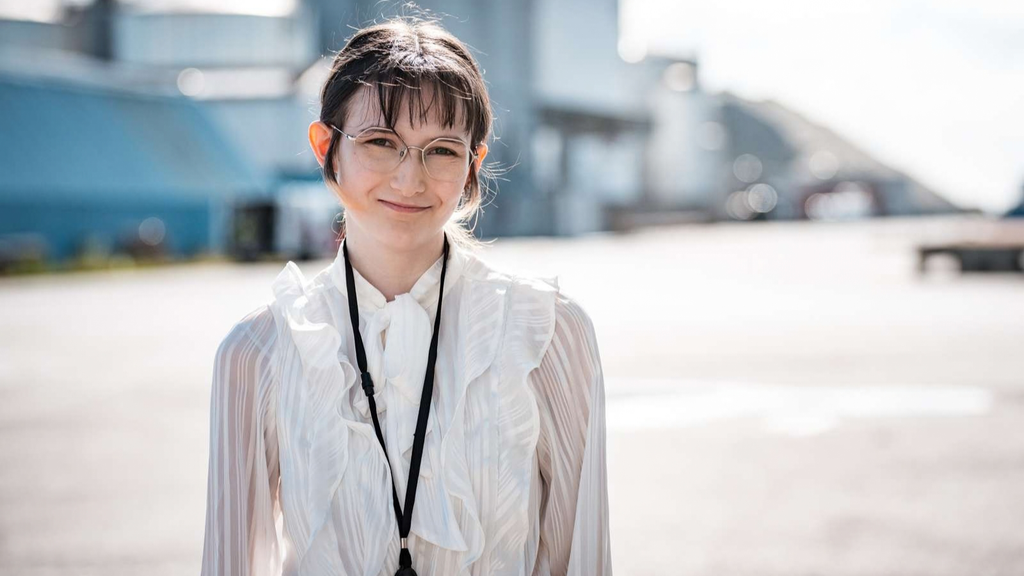
After several years of clarification and various internships, 24-year-old Adisa Egrlic has been permanently employed in a flexible job at Grenaa Port. Here, she has been given more responsibility, greater independence and, not least, a workplace where she feels comfortable, at her own pace.
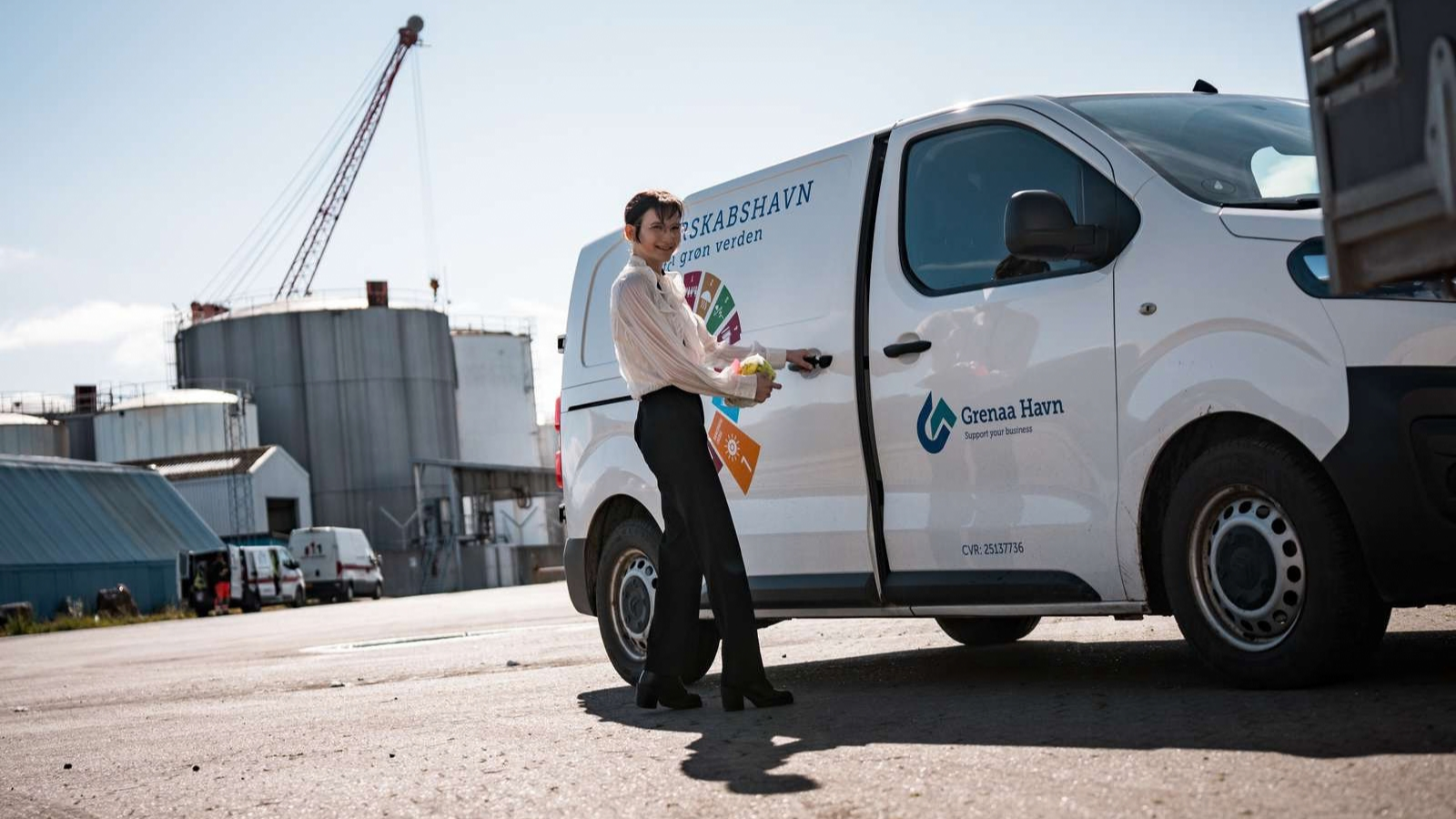
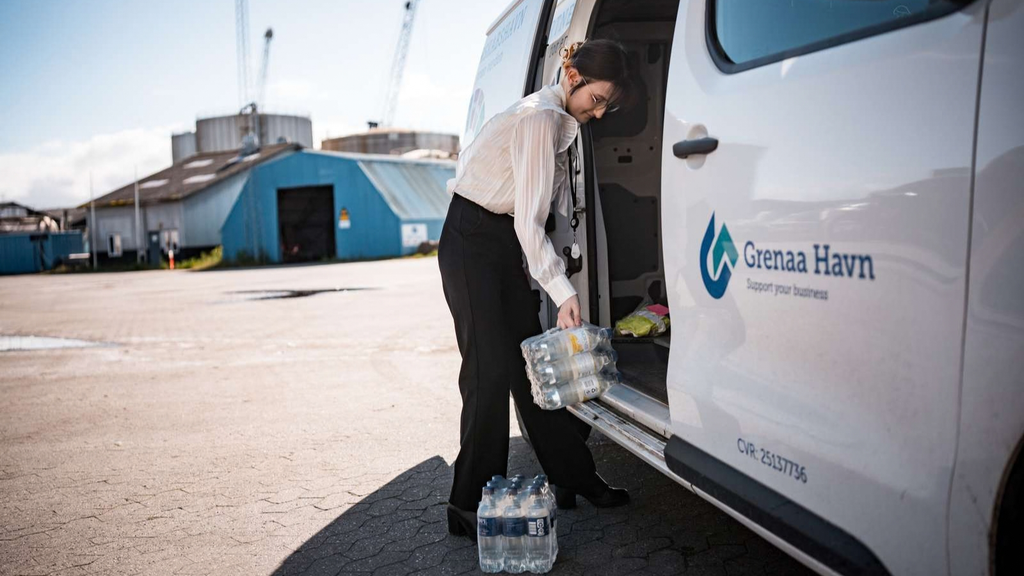
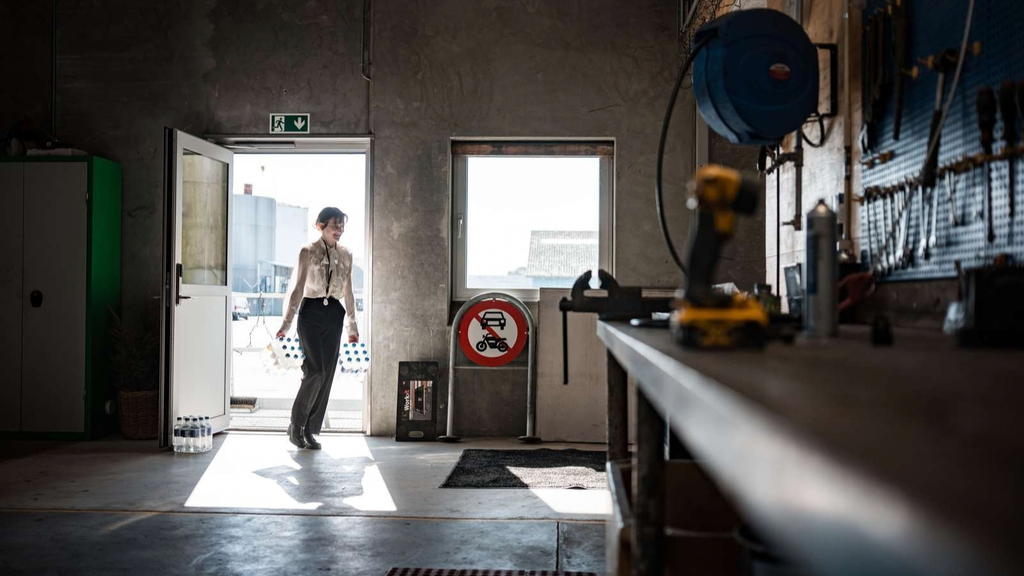
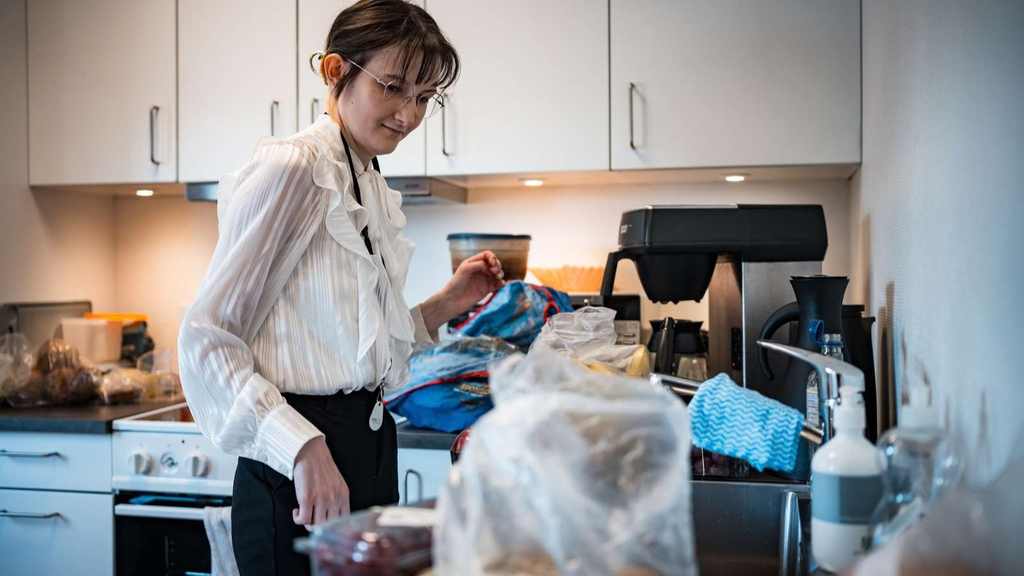
For 24-year-old Adisa Egrlic, getting behind the wheel of the Grenaa Port van has become a regular Monday routine. She drives the van confidently and confidently to the local supermarket, where she buys fruit, milk, sparkling water and cold cuts. When the van is loaded, she rolls towards the port's operations department, unloads and prepares the fruit for the department's employees. Then it's off to Port Centre , Grenaa Port's administration building, where fruit is also unloaded and prepared.
Today, it has become a regular part of her workweek. But the first time she had to drive alone, it was a big and challenging task.
“I remember it was a bit nerve-wracking. I wasn’t used to driving a van or an automatic transmission. I also had to drive into the port’s commercial area, where there are a lot of large vehicles to keep an eye on. At first, I thought it was a very big task to give to someone like me,” says Adisa Egrlic with a wry smile.
The first few times she rode with her colleague Anne. Here Adisa could see how the task was solved, and then decide when she was ready to try it alone.
“I was allowed to take it at my own pace. When I had to go on my own for the first time, I actually felt pretty ready. Now I've become completely comfortable with it.”
Throughout most of her young life, Adisa Egrlic has had difficulty finding her place in the world and struggling to figure out which education and work life would be best for her, and the skills and interests she brings with her.
"I have been through several assessments, and my youth has been characterized by anxiety and OCD. I have had a really hard time getting out into the world. And I have been nervous about getting to know new people and what they think of me."
At the age of 18, she began a course through Norddjurs Municipality. An important part of the process was finding out what she would thrive with in a workplace and what kind of framework she needed.
"I found out how much I was capable of and what I liked to do. I am very organized and tidy, and I have an eye for detail."
She had the opportunity to use this during an internship at Grenaa Library that lasted about two years. She knew the library very well from her childhood, and the calm environment and the work of putting books in their place suited her well.
Later, an internship at a junior club under Ung Norddjurs followed. Here, Adisa Erglic helped create creative activities for the children and was able to put her great interest in drawing into play.
“It was very much outside my comfort zone, but I liked it.”
The different courses each gave her the opportunity to try out new sides of herself. But they also meant several years where she didn't know exactly where she would ultimately land in the job market.
From internship at the port to greater responsibility
In August 2024, Adisa Erglic, as part of Ungeløftet, a national partnership that aims to help young people without jobs or education get closer to the labor market through, among other things, collaboration with local companies, began an internship at Grenaa Port.
Here too, it took time to settle into the new surroundings.
“I was nervous about meeting a lot of new people and what they would think of me. It's hard to start from scratch and have to adapt to a completely new work environment.”
She started with specific tasks such as preparing meeting rooms and cleaning the coffee machine. Like other internships Adisa Erglic has been in, she started with a few hours. After that, both working hours and tasks are coordinated with the individual.
For Adisa, it gradually became three days a week, three hours each, and more tasks that she could complete independently.
Along the way, she spent three months in Japan, which has a very special place in her heart, on a language trip with two friends.
"There I had to be responsible for everything myself. I could feel afterwards that it had done something for my independence."
Back at Grenaa Port, she continued to try new tasks. Together with her job consultant and colleagues at the port, the focus was on how she could become more independent during the working day. This is where the shopping trip in the van came into the picture.
When Adisa Erglic is not shopping and solving other practical tasks, she can also be seen moving calmly and almost silently between the offices at the port to water the potted plants that are placed in the employees' offices.
“I don't really know much about plants, even though I grew up in an allotment garden where we grew a lot of vegetables. But I like dealing with living things, and people are always nice when I come around the offices.”
Room for different paths into working life
Adisas Egrlic's course is an example of the approach to young people and working communities that the Port of Grenaa formalized in 2025 through its commitment to the Youth Promise.
The Youth Promise is a national partnership between, among others, businesses, civil society actors, social partners, main organizations and the Danish Association of Local Authorities. In Norddjurs Municipality, the goal is to create space in local businesses for approximately 300 young people who are outside the labor market or the education system.
As a partner, the Port of Grenaa has committed to welcoming young people and creating practical courses where tasks and frameworks are adapted to the individual as much as possible.
"As a workplace, we really want to help create meaningful frameworks where young people can grow, find direction and become part of a working community. We hope that we can help motivate young people and give them the opportunity to experience that what they bring has value," says Anne Timmann, internship manager at Grenaa Havn.
For Adisa, it has been important that the development has been able to happen gradually.
“It means an awful lot”
After about a year and a half of internship, Adisa Erglic has been employed in a flexible job at the Port of Grenaa.
“It means a lot that I am now a permanent employee. I like being here. Everyone is nice and considerate, and it is great to know that I can stay. It gives me a peace of mind that I have not felt before. It is a great relief,” she says, emphasizing with more strength in her voice:
"My parents are also very happy. They have been there through it all and have seen how difficult it has been at times. Now my everyday life is much more stable, and I have a decent income."
She especially appreciates the good colleagues and the opportunity to develop herself:
“I work at the reception, and my colleagues there coordinate my work tasks. It's just so nice to work with Anne and Maria. It always feels quiet and calm, and there's a good atmosphere. It's not strict and rigid here.”
At the same time, Adisa is open to new tasks.
"You can put me to almost anything if needed. Now I can feel that I am ready to try even more new tasks – even things I don't usually do."
A creative life outside of work
When Adisa is not at work, she spends a lot of her time drawing, cosplaying (a hobby where you dress up as characters from movies, series, computer games and comics, among other things), and going to fairs and conferences. She draws especially photorealistic portraits and has made friends and acquaintances all over Denmark through the cosplay community.
"The coolest thing is to be surrounded by like-minded people who understand you and love the same things. Community really means a lot."
Although creativity takes up a lot of space, Adisa wants to keep her hobby and work separate. Being creative and drawing should be something she does because she wants to.
And right now she has found herself well settled at Grenaa Port:
“Right now I can feel that Grenaa Port is a place I want to stay for a long time.”
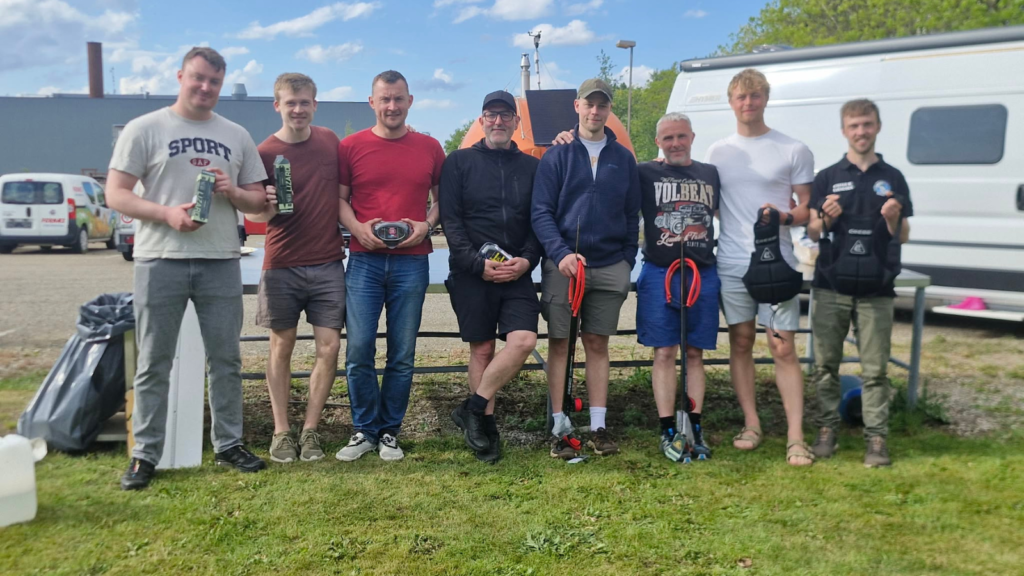
From a bike race to benefit the Danish Multiple Sclerosis Society to community-building and activities underwater. Glenn Selbo from Grenaa and the Havodderen association are two examples of local initiatives that have recently received support from the Port of Grenaa.
Wednesday, September 30, is the application deadline for the next round of Grenaa Port grants and sponsorships.
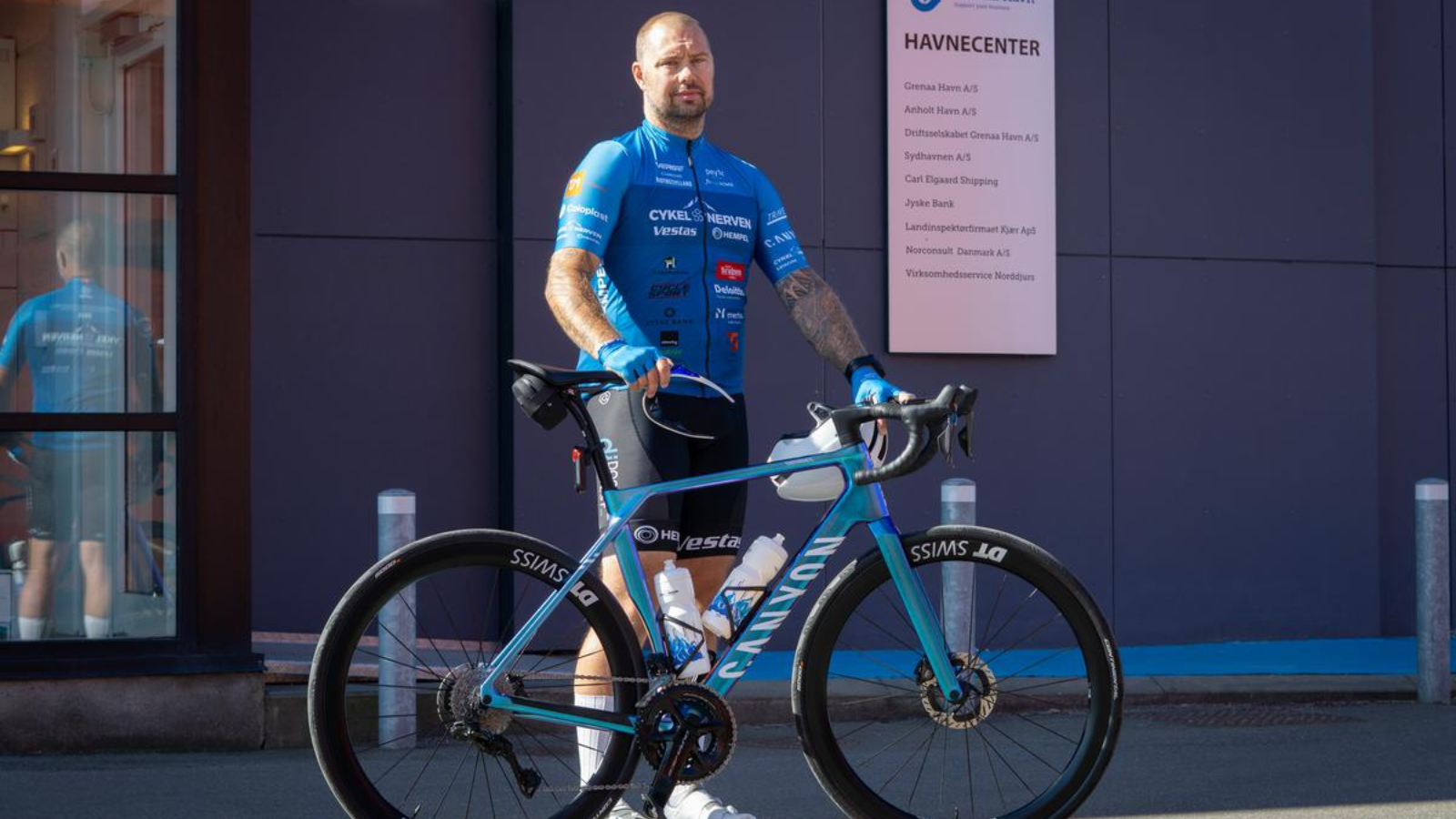
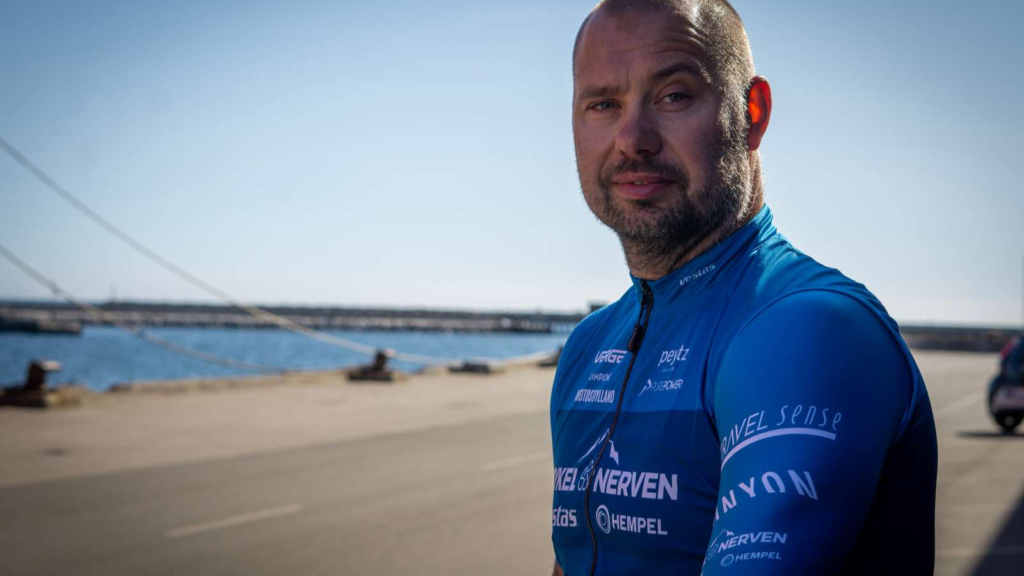
With support from Grenaa Port, among others, Glenn Selbo has participated in Cykelnerven—Denmark’s toughest charity bike race to benefit the Danish Multiple Sclerosis Society. In this event, riders challenge themselves on some of the iconic Tour de France mountains while raising money for multiple sclerosis research and the effort to build a future free of the disease.
Glenn has received sponsorship support from the Port of Grenaa for his participation. Together with support from a wide range of other sponsors and donors, he has managed to raise a substantial amount of money for the good cause.
Community Beneath the Sea's Surface
Another initiative that has recently received support from the Port of Grenaa’s Grants and Sponsorships program is the Djursland Team Cup – Havodderen Open.
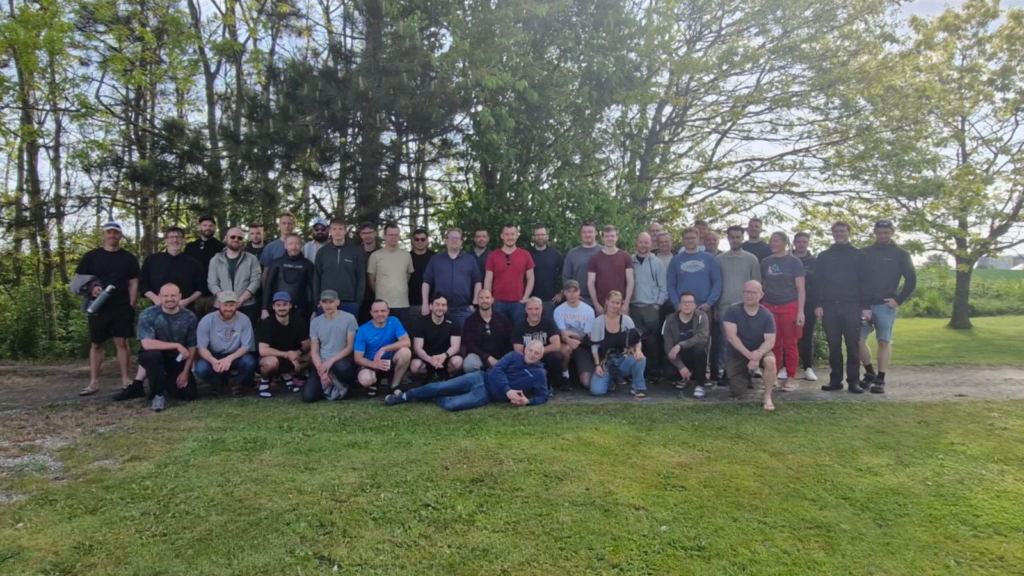
The event was held at Grenaa Harbor at Fornæs Ship Recycling and brought together 22 teams and 44 underwater hunters this year—the largest number of participants in several years.
The event is organized by the Havodderen association, which brings together free divers and underwater hunters who share a passion for the ocean and life beneath the surface.
In addition to the competition itself, there was a focus on the marine environment. A special prize for the best collection of marine debris gave participants an extra incentive to retrieve trash from the ocean.
Grenaa Port’s sponsorship of the event helped fund the prizes and the post-competition meal—and thus contributed to the overall atmosphere of both the competition and the sense of community.
When Local Initiatives Make a Difference
The Port of Grenaa offers grants and sponsorships for local initiatives, projects, educational programs, and sports activities that contribute to development and community in Norddjurs Municipality.
Both individuals and organizations can apply for this grant. Examples include local sports clubs and associations, students, dedicated volunteers, or individuals and groups working on social initiatives and other activities that create positive value in the local community.
Do you have a project or an idea?
Applications may be submitted at any time to Grenaa Port’s Grants and Sponsorships program.
If you would like your application to be considered in the upcoming round, Grenaa Port must receive it no later than Wednesday, September 30.
Do you or your organization have an initiative, a project, or an activity that creates value and a sense of community in Norddjurs?
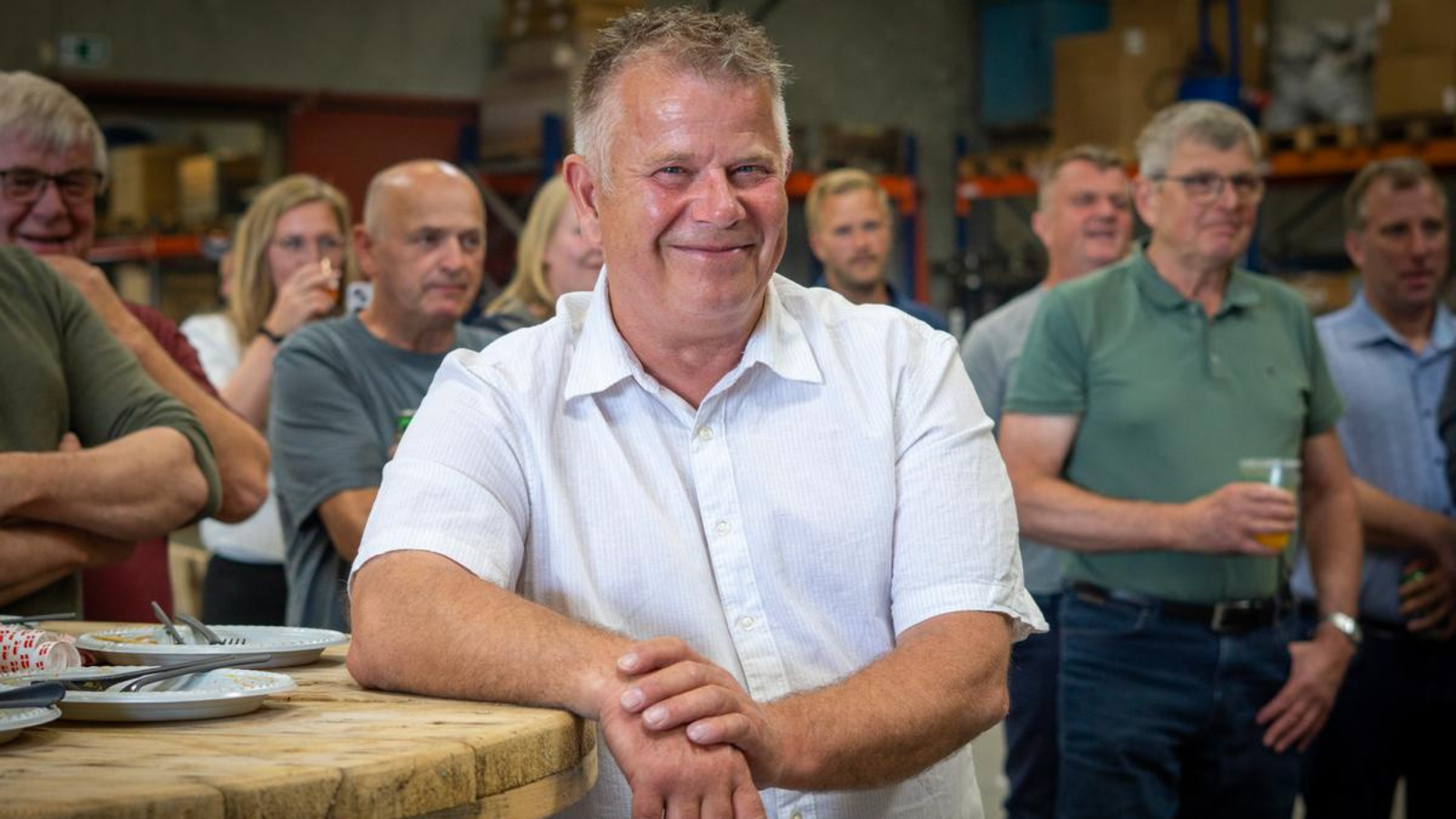
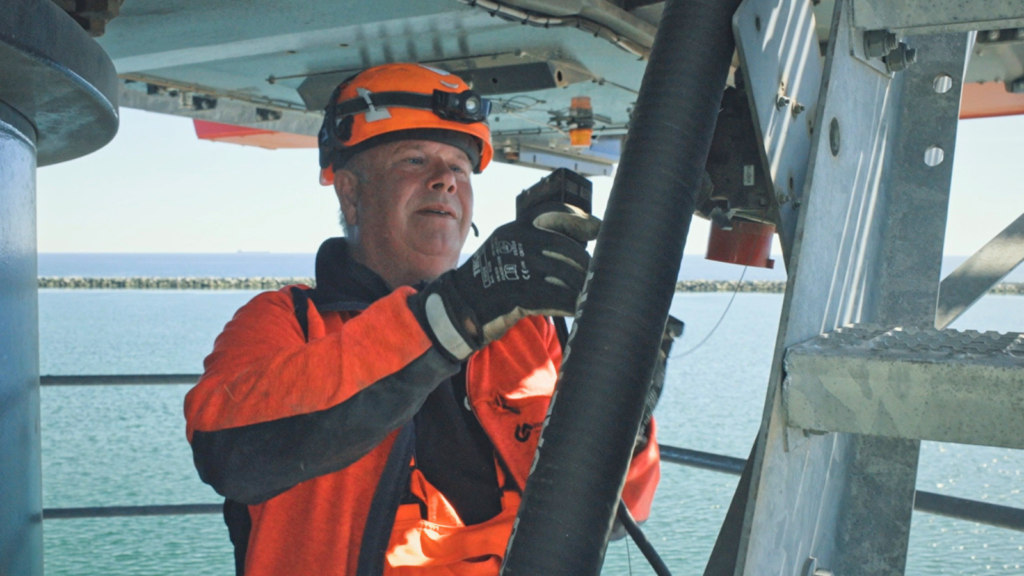
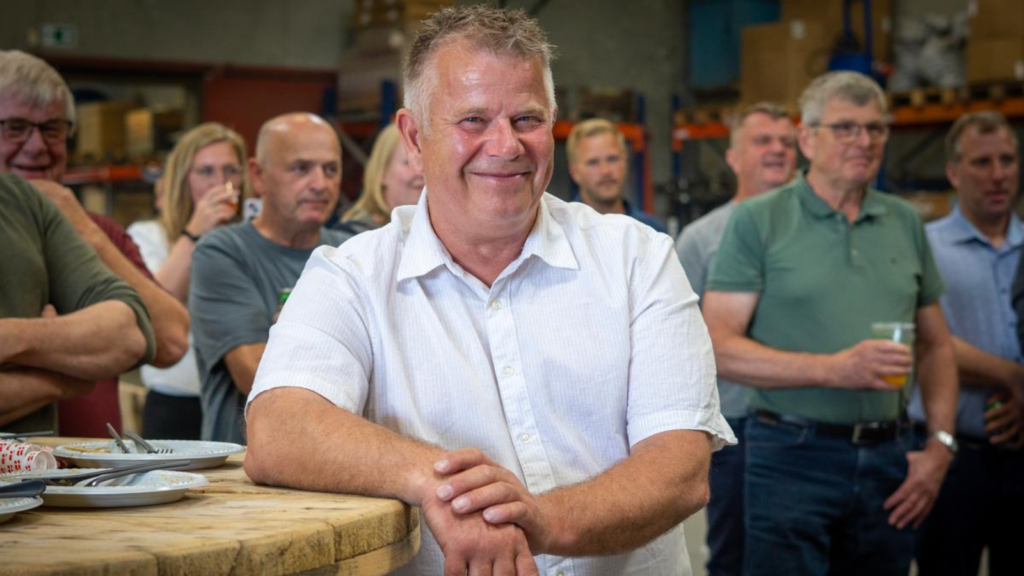
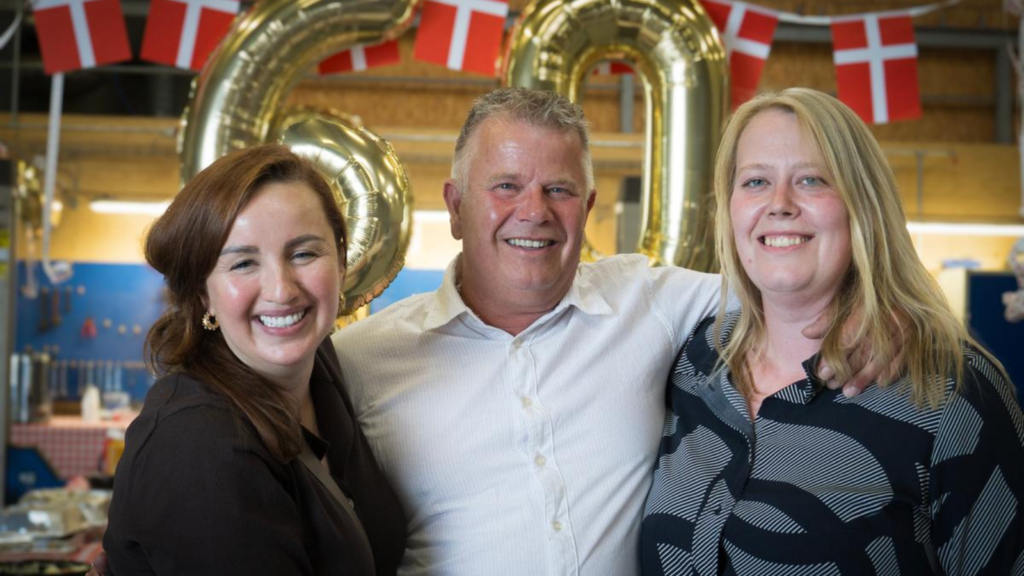
Christian Hansen is celebrating 25 years at the Port of Grenaa and will turn 60 in July. Over the years, he has helped shape the port’s development, and even after a quarter-century spent among cranes, ships, large-scale operations, and massive machines, he has no plans to give up life on the docks.
The port hasn’t really woken up yet when Christian Hansen arrives at the lunchroom at Grenaa Harbor, which is located next to the commercial port’s machine shop.
He unloads the dishwasher, makes coffee for his coworkers, and enjoys the peace and quiet until the clock strikes and the workday begins. He drinks his coffee every day from the same cup, and Mr. Hansen—as his coworkers like to call him—naturally has a regular seat in the lunchroom as well.
For 25 years, Christian Hansen—who will also turn 60 in July—has spent most of his waking hours loading and unloading ships as a crane operator and handling a wide variety of tasks as part of the service team at the Port of Grenaa. It’s a diverse mix of planned and unexpected tasks that arise when navigating a workday involving large machines and ship operations involving tons of cargo.
“Even though I’m very much a creature of habit, I also like it when something unexpected happens. There’s always something exciting going on at the harbor, and we never quite know what the day will bring,” says Christian Hansen, explaining how he was called out to the harbor earlier that day to watch a ferry being lifted.
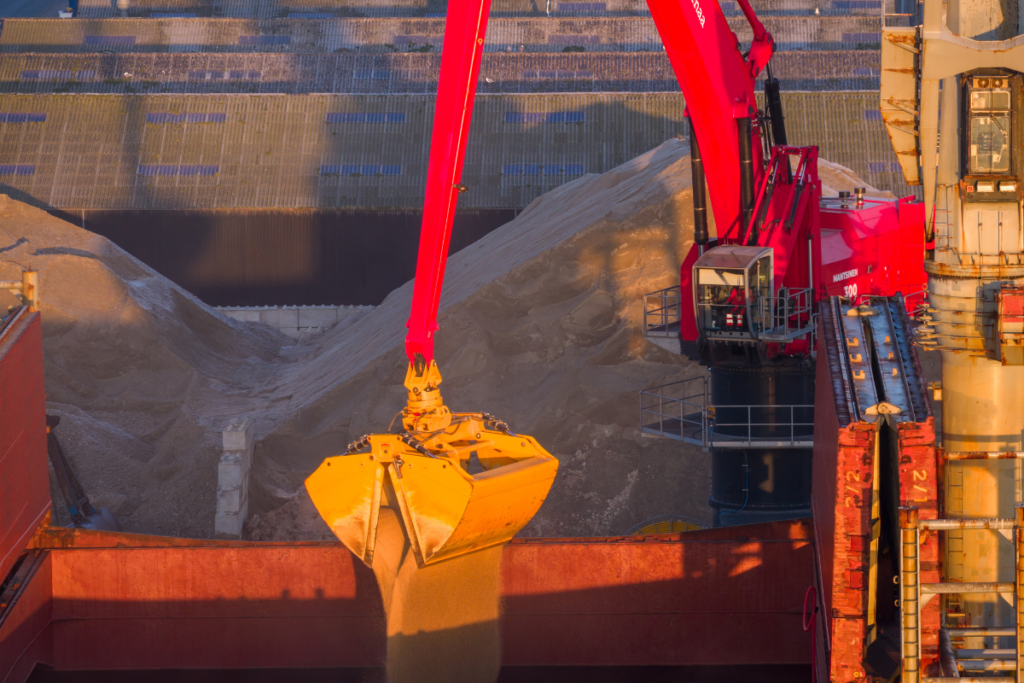
By the way, he should also keep an eye on the phone, because the port’s largest crane—the Mantsinen 300DEMG, also known as Goliath—is being serviced by a repairman.
“It’s nothing serious,” he says reassuringly, as if it were a beloved family member.
Christian's crane
And even though the 428-ton crane—with a reach of 40 meters and a lifting capacity of up to 50 metric tons—is owned by the Port of Grenaa, Christian Hansen refers to the crane as “mine.” He was also closely involved in the acquisition of the crane, which was purchased to increase the port’s capacity.
“I like big machines. It’s exciting when something new comes along and you have to get to know it. The Mantsinen is my third new crane. It’s great to get to experience that. It’s important to me that my work continues to challenge me. A new crane does just that—I have to get to know it and get the most out of it during operations.”
His coworkers also know that Christian Hansen takes extra good care of his equipment.
The machines are always fueled up, lubricated, and ready for the next job. And if he happens to have a rare day off, it’s standard practice for him to call his boss around 8:15 a.m. to check in, and he often stops by the harbor as well.
Torben Koustrup, head of the operations department at the Port of Grenaa, explains:
“He just needs to take a quick look, check the crane, and make sure it’s not leaking oil, and then he’ll be good to go again,” he says with a smile, adding:
“Christian is very particular about making sure the machines are ready for the day’s operations. Everything has to run smoothly and be in top condition. And if anyone else has operatedhis crane, it must be returned in the same condition as when it was received.”
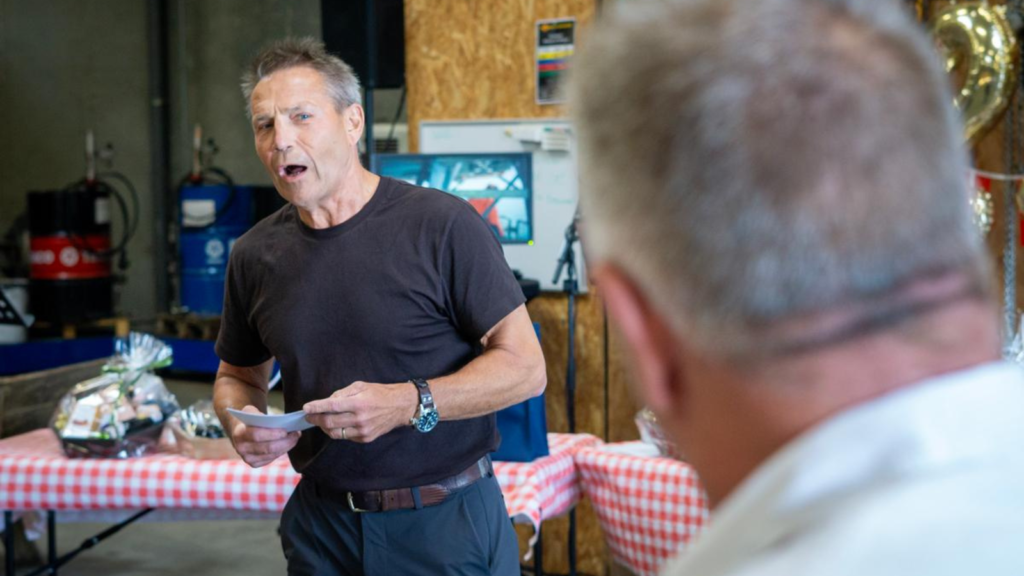
Christian Hansen's immediate supervisor, Torben Koustrup, gave a speech at the anniversary celebration, which was held at the Grenaa Port workshop on Thursday, June 18.
Yes to machines—no to dairy cows
Before Christian Hansen was hired at the Port of Grenaa, he worked at Thor Fisk, where, among other things, he operated a forklift at the large fish processing plant, which at the time had 800 employees. When his father fell ill with cancer, Christian Hansen took over the family farm at Fornæs:
“I realized that I’m a very social person. Walking around among all those dairy cows wasn’t really my thing. I had to decide whether to go all in on the dairy cows and build a new barn. But I knew that I’m very sociable and thrive best when working outdoors. I needed to get out and be around people and machines.”
The choice fell on the harbor.
Over the years, he has witnessed port expansions, new terminal areas, and investments in modern equipment. At the same time, operations in the bulk business segment have grown significantly, tripling in the last three years alone. Christian Hansen has played a central role in this as part of the port’s operations department, which today has 10 employees, including six crane operators.
Is skilled in operating all of the port's machinery
In 2015, at the urging of his boss at the time, Christian Hansen obtained his crane operator’s license. This added a new passion to his list of machinery—which, on the home front, also includes a combine harvester and several New Holland and Ford tractors.
“Getting my crane operator’s license was the worst thing I’ve ever done. It wasn’t like me at all to be sitting in a classroom, having to go up to the board and present all kinds of calculations. But I made it through—and I certainly haven’t regretted it.”
The port’s large machines—especially hydraulic cranes—are close to his heart. So is the Port of Grenaa as a company and a workplace.
“I’m sure Christian has many loves in his life, but one of the greatest is undoubtedly the Port of Grenaa. He is dedicated, proud, and very meticulous when it comes to the machinery and tasks he’s responsible for. He’s really just a big kid who’s crazy about machines,” says Torben Koustrup, emphasizing that the honoree is also known for offering a bit of pushback and not always jumping right into something new.
“He’s always tackling a new, big project, enjoys challenging me, and can handle a bit of resistance. But once he gets past that, he’s incredibly solution-oriented and skilled at planning and optimizing operations to make them as efficient as possible. He is highly regarded by both customers and business partners. He can operate all of the port’s machinery—and he’s always happy to lend a hand, whether it’s in the crane, the forklift, the re-stacker, or working on the ground.”
The port director gives a speech in honor of the honoree.
A Key Role in a Growing Company
Over the past 25 years, Christian Hansen has managed to find his place in a growing company that has welcomed more and more colleagues.
“Christian is good at welcoming new colleagues—he needs to get to know them first, but once he has, he helps them find their footing. He means a lot to the community; he’s someone you can laugh at and laugh with,” says Director Henrik Carstensen, who has led the port for the past 11 years, and adds:
“Christian has seen the port through tougher times, and he has been part of the development we see today. He takes care of his cranes as if they were his own and is always ready to put in an extra shift. But most importantly, he is a fantastic colleague and ambassador for the Port of Grenaa. I simply don’t think he can imagine a life without the port—and we have a hard time imagining the port without Christian.”
Christian Hansen has been employed at the Port of Grenaa for 25 years. One of his absolute favorite machines is the large 428-ton Mantsinen crane, which has a reach of 40 meters and a lifting capacity of up to 50 metric tons.
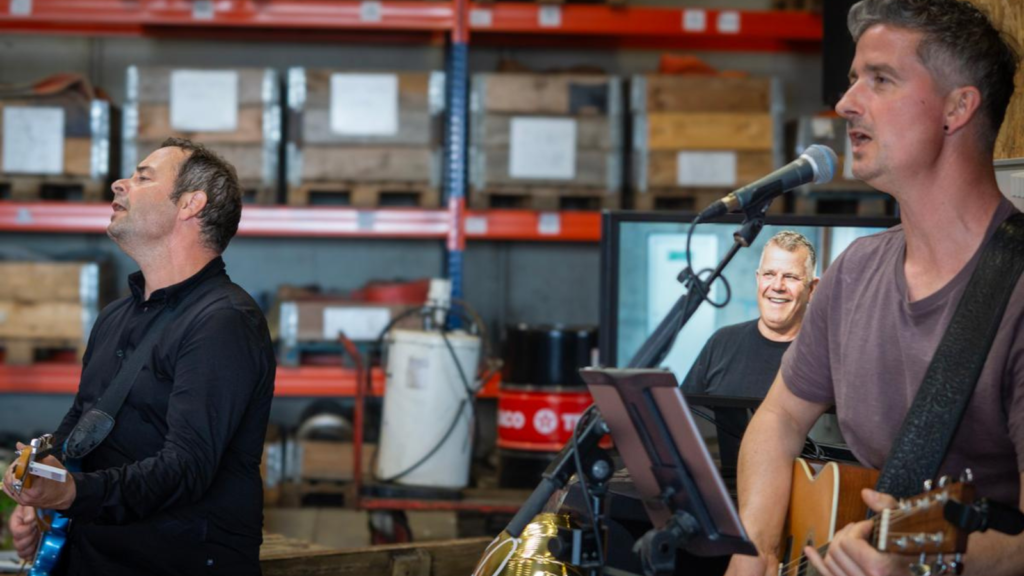
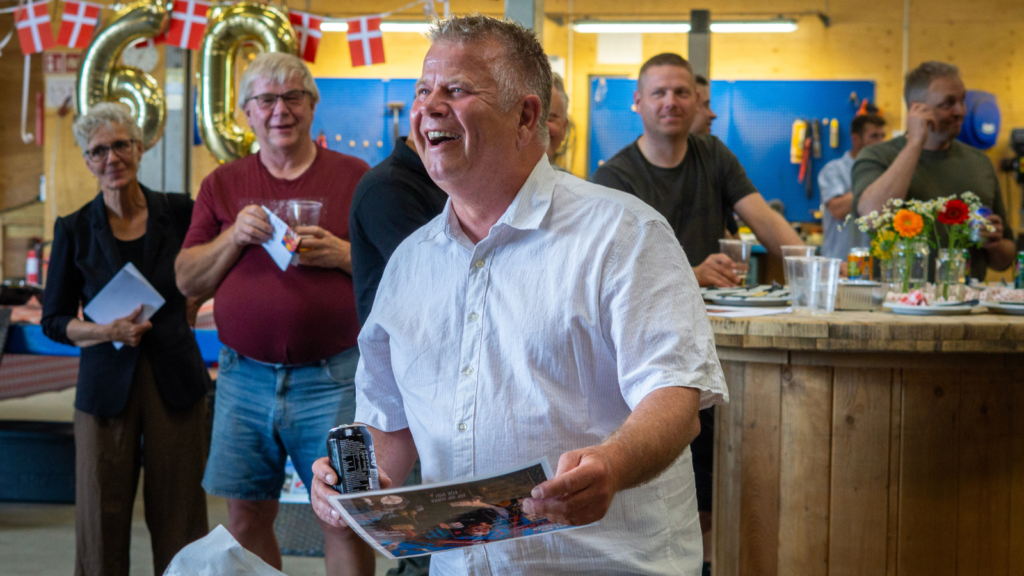
My colleagues Nicolai and Jonas sang sea shanties. Frank Larsen from Østship, for whom Christian Hansen has carried out many projects over the years, is giving a speech. Christian Hansen surrounded by his family. The honoree was treated to heartfelt speeches and gifts at the party, which brought together more than 60 guests in the workshop at Grenaa Harbor.
Another major construction project has been completed at the Port of Grenaa.
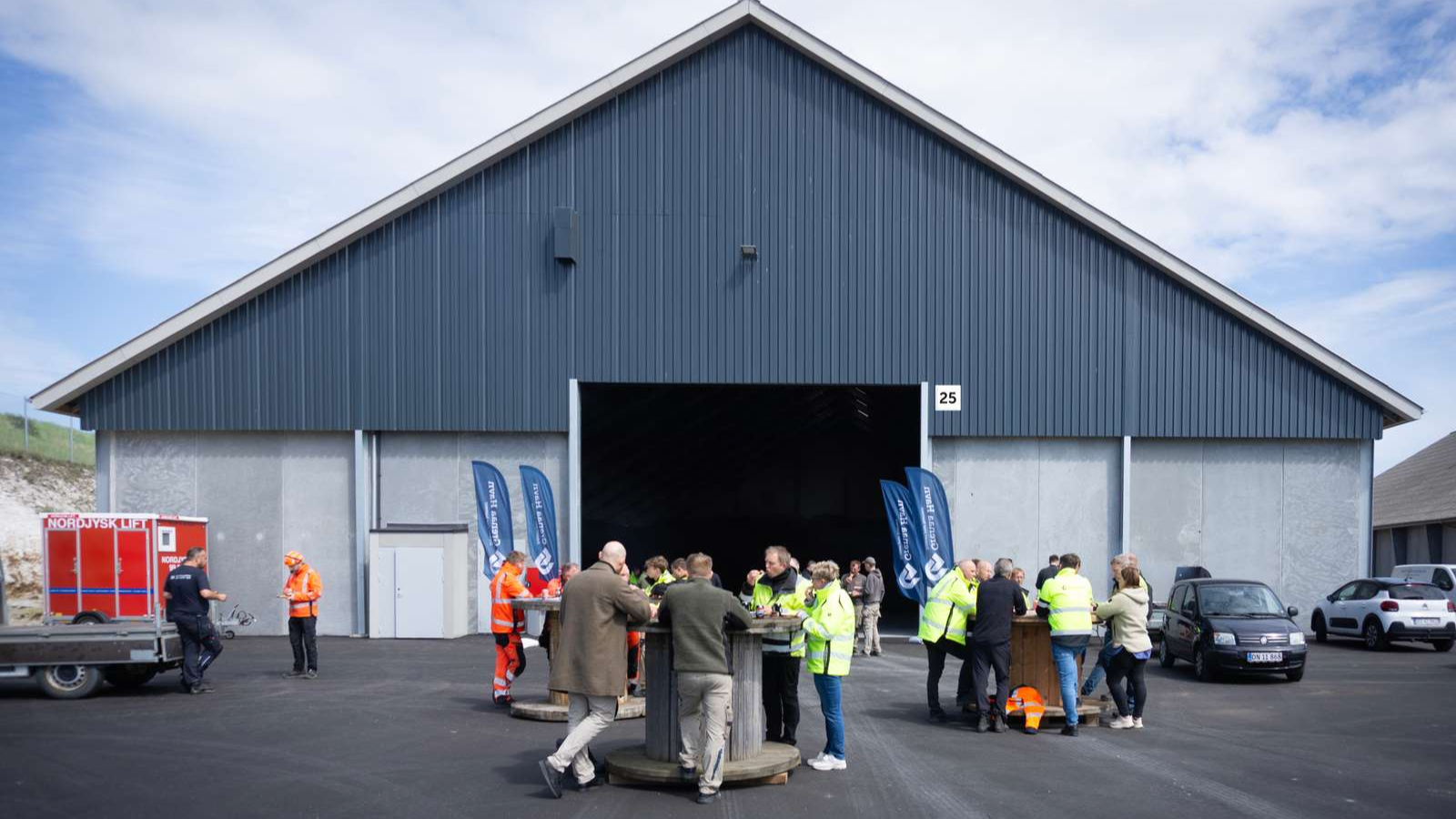
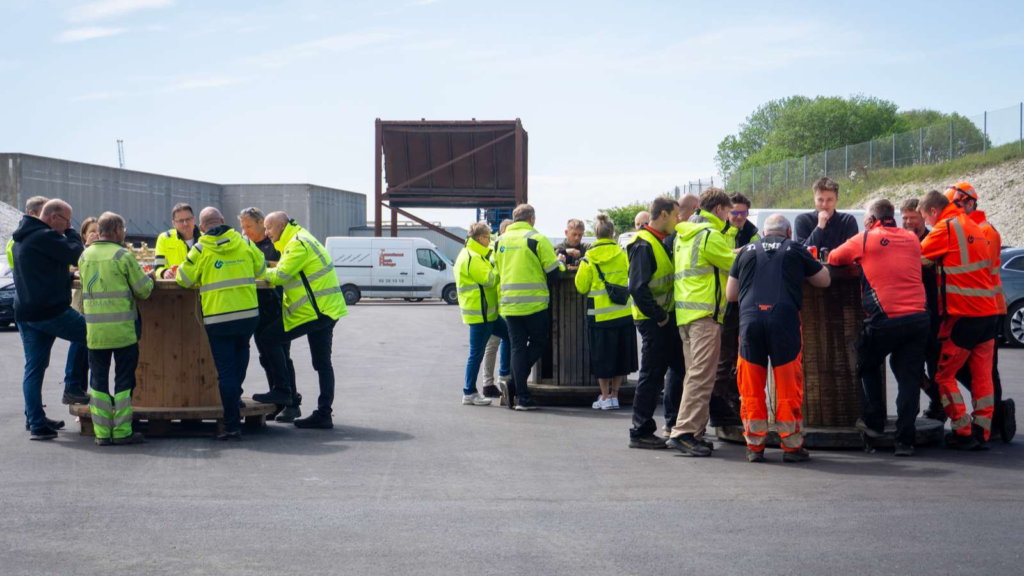
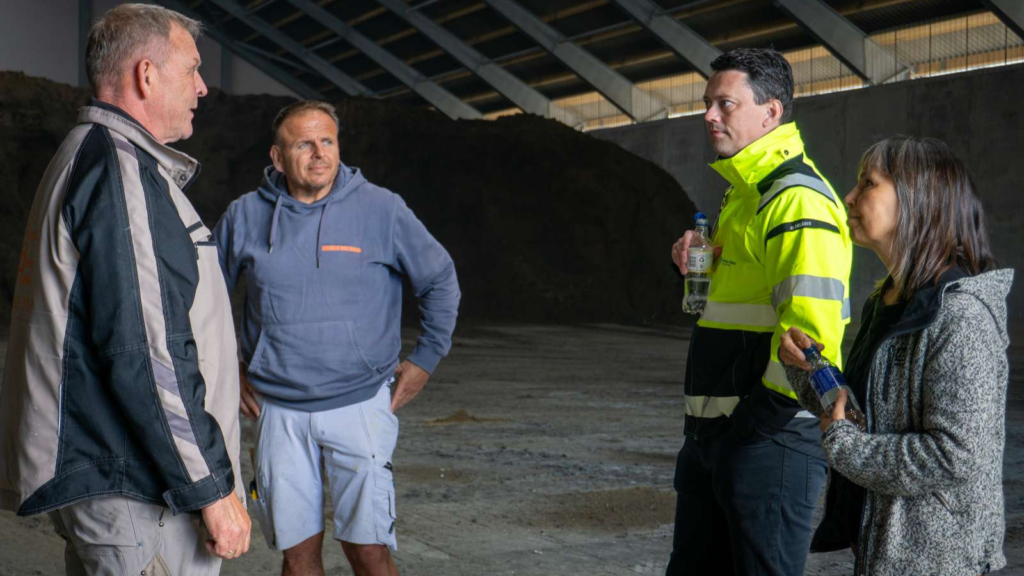
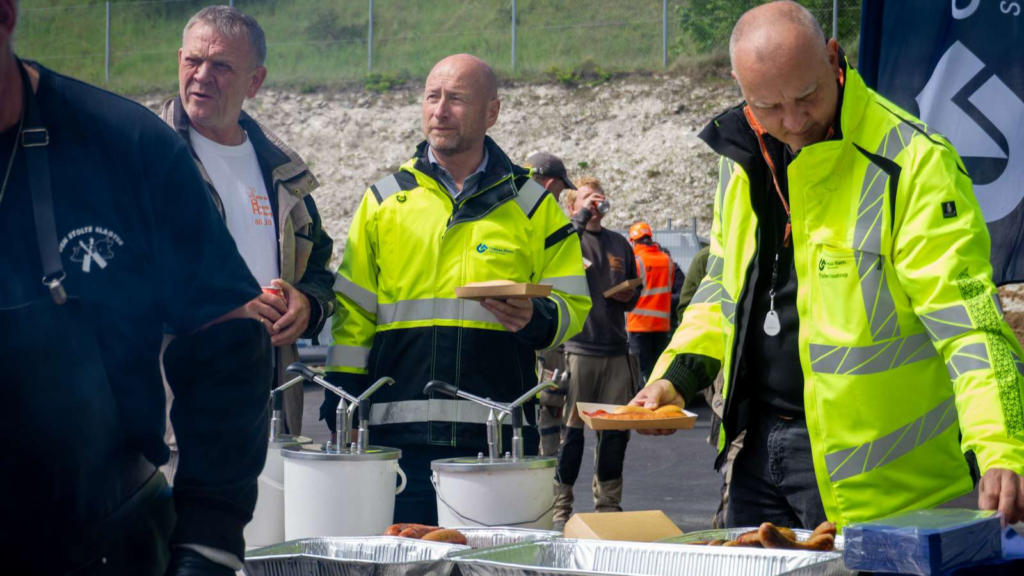
A new warehouse has been officially inaugurated in the presence of customers, partners, and local suppliers, all of whom helped make this new project a reality.
The warehouse, which measures 30 by 65 meters, was built in five months and is part of a larger expansion of the port’s storage and warehouse facilities.
CCO Theis Gisselbæk delivers the opening remarks.
“It’s great to celebrate when we, together with our excellent partners, successfully complete the projects we set out to do. This means we can deliver a product that our customers need. It also shows that we are committed to growth and constantly doing our best to find new opportunities,” said CCO Theis Gisselbæk at the inauguration.
Strong local collaboration
Several local businesses and partners have been involved in the project—including the carpentry firm Henrik Hedeager and the architectural firm Arkikon.
“We’re thrilled that the port has chosen to buy locally. We’ve built several structures at the port over the past ten years, and this is the tenth building we’re helping to construct,” says master carpenter Henrik Hedeager.
The construction project faced challenges such as frost and strong winds, but the foundation work was completed before the winter weather set in.
Arkikon is also pleased with the developments at the harbor:
“It’s exciting because there’s so much going on at the Port of Grenaa right now. The port has a lot of great projects underway, and we’re working closely together on them,” says structural engineer Eva Hard.
From left: Henrik Hedeager, Klaus Jakobsen, Theis Gisselbæk, and Eva Hard.
Bigadan Sourcing & Trading has already begun using the warehouse to store bulk goods for biogas production.
The new warehouse is just the beginning.
The Port of Grenaa has already signed a contract for two additional new warehouses, which are expected to be completed in 2026. At the same time, plans are underway for a new industrial park covering approximately 60,000 square meters, with space for six to eight large warehouses in the coming years.
The expansion is intended to meet the growing demand for modern storage capacity that complies with stricter environmental and emergency preparedness requirements for the storage of, for example, building materials, industrial products, and recycled raw materials.
Thank you to all our partners and local businesses who have helped bring yet another project to a successful conclusion.
Henrik Hedeager Carpentry
Arkikon
Apro Denmark
Rasmus Jakobsen Construction and Contracting Company
Port of Grenaa solid and satisfactory financial results for 2025, confirming a healthy and robust core business. Revenue totaled DKK 86.7 million, while profit after tax for the year amounted to DKK 9.4 million. The results were presented on Monday, April 27, 2026, at Port of Grenaa’s annual general meeting.
“Following an exceptional 2024, it is very satisfying that we are maintaining a high level of activity in 2025 and delivering solid results. This confirms that our business rests on a strong and stable foundation. It is important to note that the record result for 2024 was influenced, among other things, by a one-time extraordinary revenue item,” says Bent Hansen, Chairman of the Board at Port of Grenaa.
He also points out that this result was achieved during a period marked by geopolitical uncertainty and stricter requirements for both operations and resilience.
“We operate in a market characterized by greater unpredictability. That is precisely why it is important that we remain financially strong and run our business in a responsible and thoughtful manner,” he adds.
High Activity and Major Investments 2025 has been marked by high activity across the port’s business areas, with the bulk sector in particular contributing positively through increased activity throughout the year.
Henrik Carstensen, director of Port of Grenaa, also highlights significant investments made during the year:
“In 2025, we completed the largest machinery investment in the port’s history with the arrival of our new Mantsinen crane. It boosts both our capacity and efficiency while supporting our green transition through the crane’s dual-power solution.”
In addition, there has been ongoing investment in the maintenance and development of the port’s physical infrastructure—initiatives that are essential for ensuring stable operations and maintaining competitiveness.
“Our sound financial position allows us to continuously develop and maintain the port area. This is essential for ensuring stable operations and enabling us to be a strong partner for our customers,” explains Henrik Carstensen.
Strategy for 2030 Sets the Course 2025 has also been an important strategic year for the Port of Grenaa. A new corporate strategy for 2030 was approved in November and sets a clear course for the port’s development.
“We are in a strong position and have set a clear course for the coming years. Our ambition remains to be a leader in bulk, recycling, and resource management, and we expect increased activity in offshore wind in the coming years,” says Chairman of the Board Bent Hansen, adding:
“We have a clear goal of delivering an even stronger port by 2030. This requires us to evolve—through partnerships, green transition, and new business areas. At the same time, we want to strengthen our role as a regional driving force—including through the development of our subsidiaries Sydhavnen and Anholt Port for the benefit of the business community, the local area, and tourism.”
In 2025, the Port of Grenaa was once again recertified under ISO 9001, 14001, and 45001 without any nonconformities, underscoring its continued focus on quality, the environment, and occupational health and safety. ESG and sustainability are integrated into both daily operations and long-term development.
Demand is straining capacity At the same time, the continued high level of activity means that the Port of Grenaa is experiencing such high demand that capacity is under pressure—particularly in terms of space.
“We are seeing growing demand and significant potential—particularly in offshore wind and green energy. That is why we are working hard to secure new areas outside the existing port area,” says Henrik Carstensen.
He also points to a general trend in the industry toward more strategic collaborations and partnerships between ports.
Optimism and Expectations for 2026 Grenaa Port expects activity to remain high in 2026 and anticipates a solid financial result, even though the world is marked by uncertainty that may make it difficult to predict major projects.
“We continue to budget conservatively, but see good opportunities in the market. With a strong foundation, talented employees, and close relationships with customers and partners, we are well-positioned for future growth,” concludes Chairman of the Board Bent Hansen.
In 2025, the Port of Grenaa also celebrated its 25th anniversary as a public limited company—an event that brought together residents, partners, and stakeholders and underscored the port’s importance to the local community and the municipality.
Composition of the Board of Directors
The Board of Directors of the Port of Grenaa consists of a total of nine members:
Three owner representatives appointed by the municipal council of Norddjurs Municipality
Five members with a master's degree in business administration
One member has been nominated by the Trade Union Confederation (FH) of East Jutland
Following the annual general meeting, the board of directors consists of:
Bent Hansen, Chairman, Business Insight
Laura Hay Uggla, Vice Chair, Business Insights
Jørgen O. M. Laursen, business acumen
Lene S. Sørensen, Business Insight
Jens Meilvang, business insight
Daniel Isak Dallerup, FH East Jutland
Lars Møller (S), appointed by the municipal council of Norddjurs Municipality
Martin Raghner (K), appointed by the municipal council of Norddjurs Municipality, newly elected
Sebastian Halkjær-Grauert (LA), appointed by the municipal council of Norddjurs Municipality, newly elected
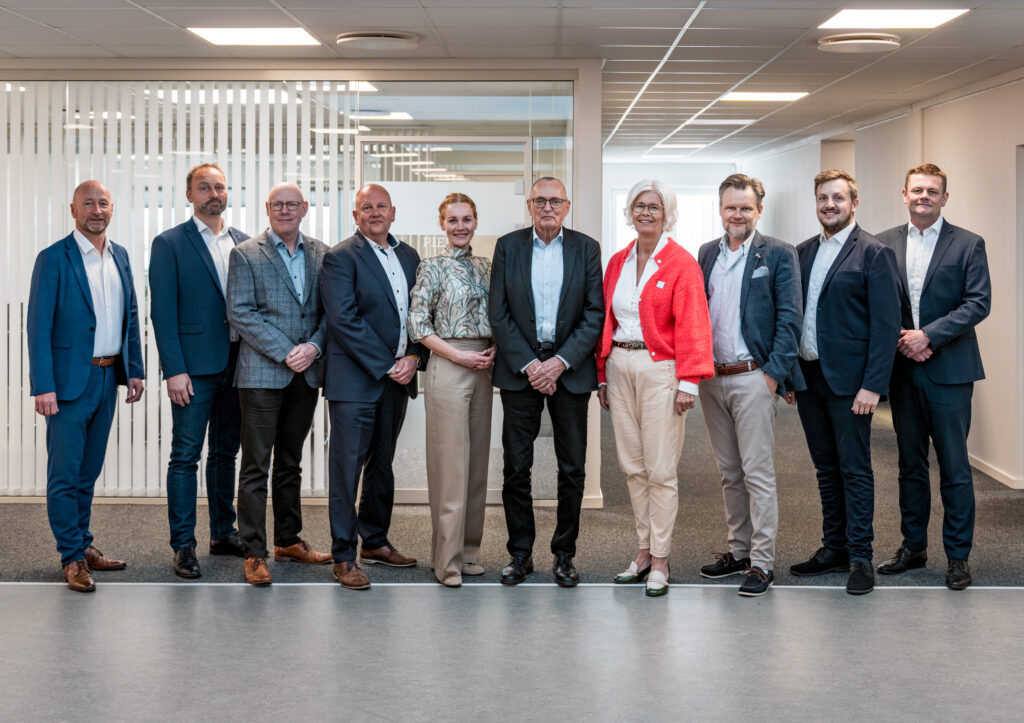
From left to right: Henrik Carstensen, Daniel Isak Dallerup, Lars Møller, Jørgen O.M. Laursen, Laura Hay Uggla, Bent Hansen, Lene S. Sørensen, Martin Raghner, Sebastian Halkjær-Grauert, and Jens Meilvang.
Port of Grenaa entered into a partnership with InterForce, which is part of the Danish Defense Command and works with companies across the country to ensure that employees can take time off from their civilian jobs to serve in uniform.
Under this new partnership, employees at the Port of Grenaa who are members of the Danish Armed Forces’ reserve forces, the Home Guard, the Danish Emergency Management Agency, or the Coastal Rescue Service will now be eligible for up to five days of paid leave per year for training or duty in uniform.
At Grenaa Port, the new partnership with Interforce is seen as a natural part of the company’s corporate social responsibility. Port employees already have the opportunity to participate in volunteer activities—such as serving as emergency responders and blood donors—even during working hours.
“InterForce contacted us to ask if we were interested in partnering with them—and we had no doubt that we wanted to. We see this as an obvious opportunity for us, as a company and a workplace, to contribute to emergency preparedness and take active social responsibility in the turbulent times we live in,” says Henrik Carstensen, Director of Grenaa Port, and elaborates:
“We don’t know exactly how many of our employees are part of the reserve force and could therefore be called to duty during working hours. But now the opportunity is there. Through this partnership, we’re making it clear that we support them—and perhaps this will encourage more employees to get involved in the Home Guard, for example.”
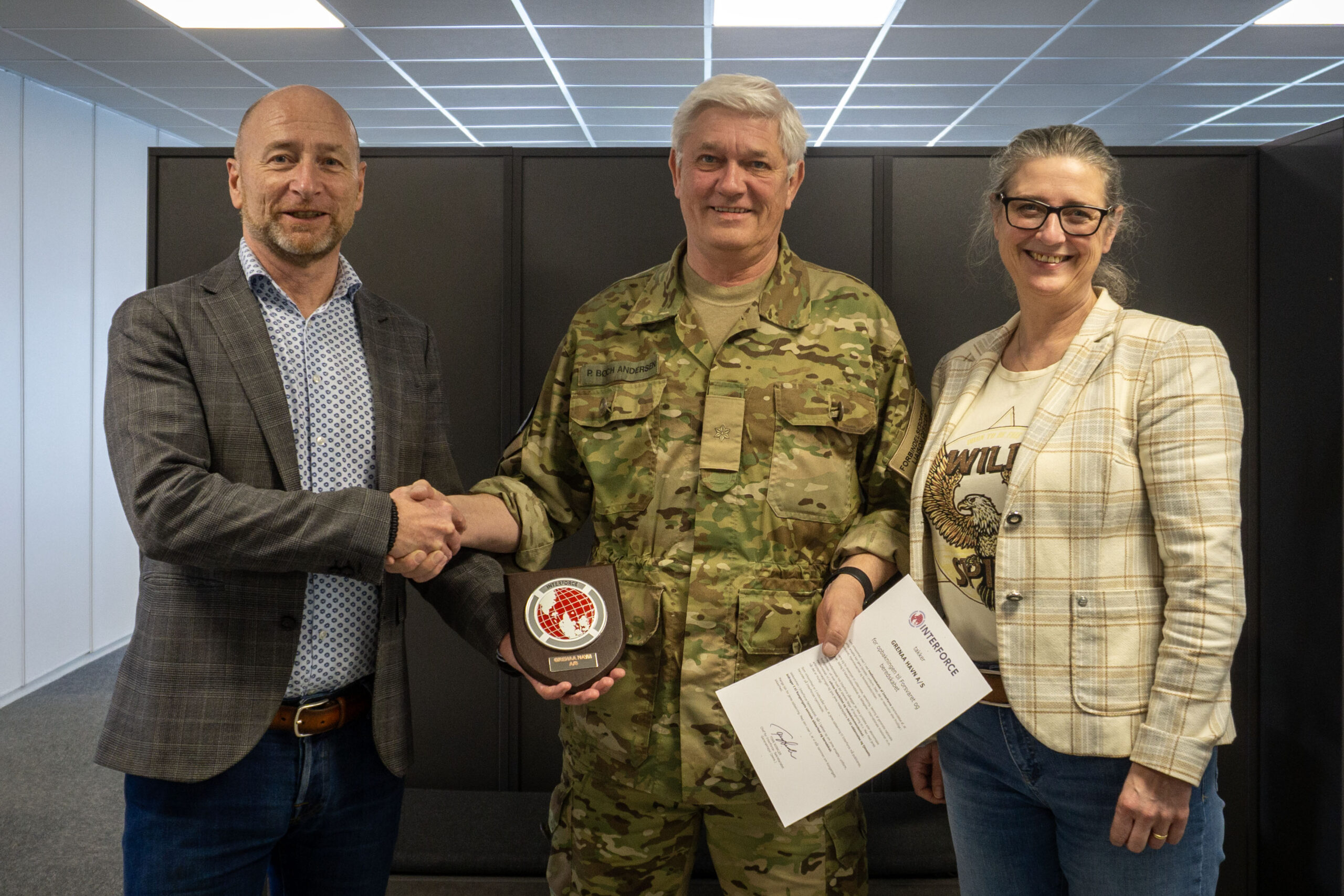
As part of the new partnership, Reserve Major Per Bøch Andersen, who serves as InterForce’s regional ambassador for the Central Jutland Region, presented an InterForce shield to the Port of Grenaa.
What is InterForce?
InterForce is an organization under the Defense Command that works to build support within the civilian sector for Denmark’s defense and emergency preparedness.
The organization works with companies across the country to ensure that employees can take time off from their civilian jobs to serve in uniform—either as reservists in the Armed Forces or as volunteers in the Home Guard, the Danish Emergency Management Agency, or the Danish Coast Guard.
These operations can range from training and search-and-rescue missions at sea to national emergency response operations, disaster relief efforts, and international missions.
Photo: From left: Director Henrik Carstensen, InterForce Regional Ambassador for the Central Jutland Region Per Bøch Andersen, and CAO Mette Klit.
Laura Hay Uggla is the new chair of Sydhavnen A/S, elected at the company's annual general meeting on March 9. The newly elected chair and board of directors will now continue working on the development of Grenaa Sydhavn and activities in the area.
At the annual general meeting of Sydhavnen A/S, a subsidiary of Grenaa Port, two new board members were welcomed and two were bid farewell.
One of Sydhavnen A/S's objectives is to develop and promote Grenaa Sydhavn as a recreational and sustainable area where maritime life goes hand in hand with business, innovation, events, and culture.
Two new members
Two of the board's five members have been appointed by Norddjurs Municipality. Jan Petersen, who has been appointed to the board by Norddjurs Municipality since 2022 and has served as chairman of Sydhavnen A/S, has resigned from the board. The same applies to Anne Bjerrekær, who has also been a member of the board since 2022.
Laura Hay Uggla and Aleksander Myrhøj have joined as new members. Myrhøj has been appointed as representative for Norddjurs Municipality, as has Benno Blæsild, who remains on the board.
At a subsequent board meeting, the board constituted itself with Laura Hay Uggla as chair and Henrik Carstensen, director of Port of Grenaa, as vice chair.
The new board now consists of:
Laura Hay Uggla, Chair Henrik Carstensen, Vice Chair Aleksander Myrhøj Lene S. Sørensen Benno Blæsild
Laura Hay Uggla newly elected chairperson.
Henrik Carstensen thanked the two outgoing board members for their efforts:
“I would like to thank Jan Petersen and Anne Bjerrekær for their commitment and work on the board over the past few years. At the same time, we look forward to working with the new members, who bring strong skills to the board’s work.”
Experience from business and local politics
Laura Hay Uggla is no stranger to port management. She has been a member of the board of Port of Grenaa since 2021 Port of Grenaa has served as vice chair since 2022.
She holds a Master of Laws degree from Aarhus University and has previously served as a councilor in Aarhus Municipality. Today, she is a board member of a number of commercial enterprises and cultural institutions, including chair of the ARoS art museum.
Laura Hay Uggla sees great potential in developing Sydhavnen:
"Sydhavnen is a very central location with great potential for both Grenaa Port and the town of Grenaa. I am convinced that this will require a strong team effort from the board of directors, Norddjurs Municipality, and the town's citizens and business community," she says, elaborating:
“I grew up on Hjarnø in Horsens Fjord and am fascinated by the connection to the sea and the unique gathering place that can be created around a harbor.”
The newly elected chair brings experience in urban development, including from her time as councilor for Technology and Environment in Aarhus.
“Through my work on a number of cultural and business boards, I have also developed an eye for both cultural and commercial opportunities. With this experience, I hope that I can contribute positively to the development of Sydhavnen and build on the great efforts that Grenaa Port, Norddjurs Municipality, and the previous board have already put into the project."
Aleksander Myrhøj is a member of the municipal council in Norddjurs Municipality for the Socialist People's Party (SF). He has been active in local politics for a number of years and works as an independent special education consultant.
Aleksander Myrhøj, new board member appointed by Norddjurs Municipality.
Further develop the vision for Sydhavnen
One of the new board's most important tasks is to draw up a good plan for the development of the area and to implement concrete initiatives. On the drawing board is, among other things, a plan for Sydhavnstorvet and a possible development of the red building located in the same area.
This development work is being carried out in close collaboration with the association "Norddjurs Development Association for Climate and Sustainable Development," which consists of representatives from Norddjurs Municipality, the Kattegat Center, Port of Grenaa Sydhavnen A/S.
Mette Klit, who took up the position of CEO of Sydhavnen A/S in April 2025, has spent the past year focusing on talking to the port's stakeholders and gathering their ideas for developing the area.
"We recently brought together a large number of the area's event organizers, including restaurateurs, hotels, and associations, for a networking meeting, where it became clear that there was strong support for joint development. This is a really positive approach to build on as the new board gets started on its work," says Mette Klit.
She warmly welcomes the new chairman of the board:
“There is no doubt that Laura Hay Uggla brings some strong skills that we need. She has experience with fundraising, and funding is one of the prerequisites for us to develop the area.”
Turning up the culture
At the general meeting, it was also emphasized that Sydhavnen has experienced great local support for the cultural events that have been held during 2025. Therefore, some of the activities in spring and summer 2026 will be scaled up.
“We are repeating the success of our one-day Sydhavnsfestival on Saturday, August 1, where this year we will be offering more music and expanding the festival area. In addition, we are also very pleased to welcome Nordisk Skudetræf on Tuesday, June 30, when we expect a number of beautiful wooden ships to visit our cozy harbor," says Mette Klit.
In the coming years, the Sydhavnen board will have to decide which initiatives to prioritize and implement, as well as how to seek funding to realize the projects.
The board will begin this work in earnest when it holds its next board meeting in April.
The Board of Directors of Sydhavnen A/S
Laura Hay Uggla, Chair Henrik Carstensen, Vice Chair Aleksander Myrhøj Lene S. Sørensen Benno Blæsild
About Sydhavnen A/S
Sydhavnen A/S is a subsidiary of the Port of Grenaa Group.
Sydhavnen A/S, whose purpose is to develop and promote Grenaa Sydhavn as a recreational and sustainable area. The company's overall mission is to create an engaging tension between historic harbor life and a developing environment around business, innovation, events, and culture. The Sydhavnen area stretches from Ndr. Kajgade in the north to the Kattegat Center in the south.
From left: Benno Blæsild, Aleksander Myrhøj, Lene S. Sørensen, Director Mette Klit, Chair Laura Hay Uggla, and Vice Chair Henrik Carstensen.
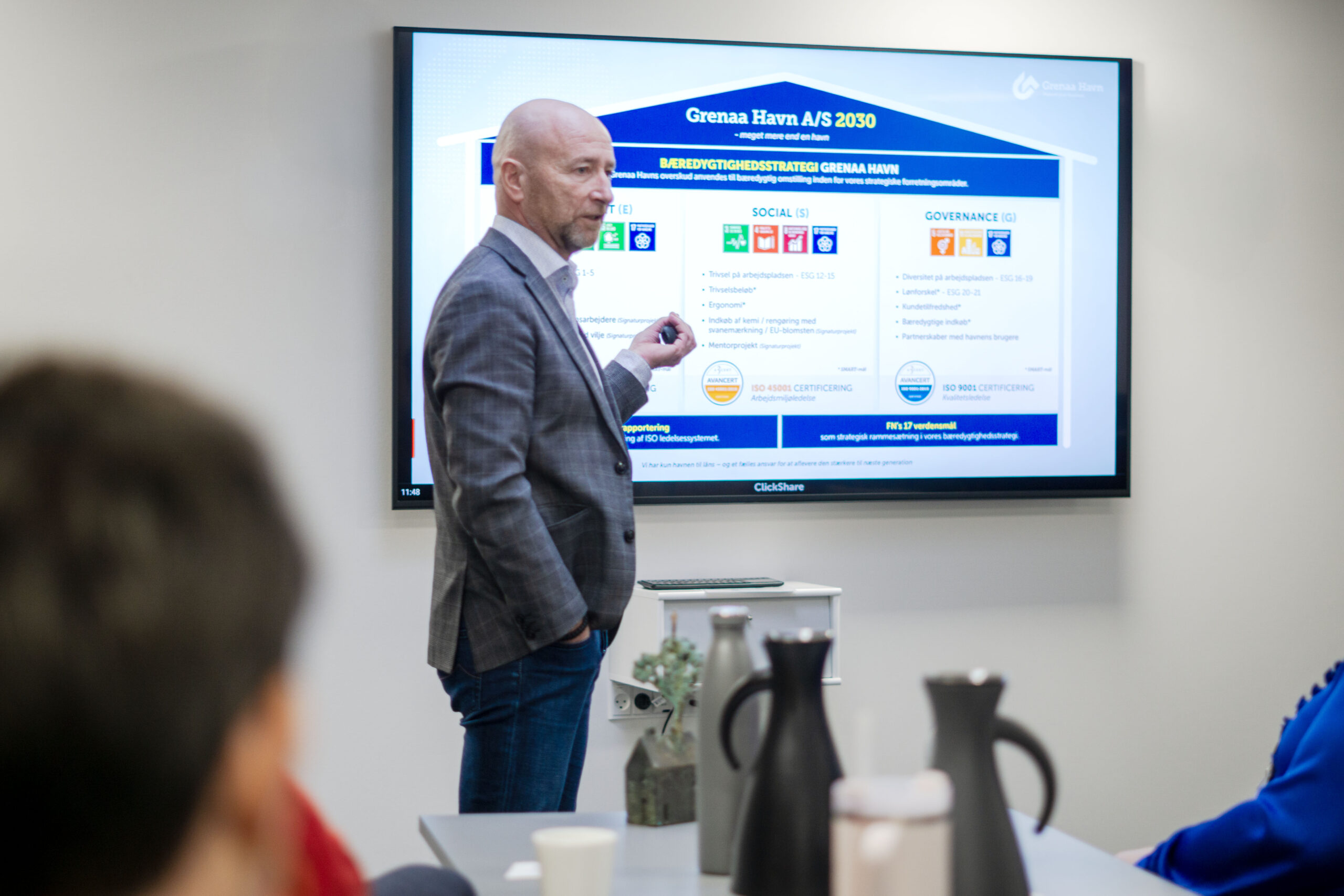
WithStrategy 2030, Port of Grenaa is setting Port of Grenaa clear course for the port's future – a course based on responsibility, cooperation, and a strong desire to deliver a stronger port in 2030.
"Our vision is to continue to be a port that is known for being professional and flexible in our collaboration with customers and suppliers. It is not our ambition to be the largest, but rather the best within our business areas. At the same time, we have an ambitious goal of strengthening our role as a central beacon for business and community development for the benefit of companies and citizens in Norddjurs Municipality,"says CEO Henrik Carstensen.
With Strategy 2030, Grenaa Port will therefore maintain its focus on being a strategic alliance partner for customers and partners.
“We recognize that we have both a significant responsibility and a significant opportunity to contribute even more to the success of our partners’ businesses – locally, regionally, nationally, and internationally,”says Henrik Carstensen.
The strategy also marks an increased focus on Grenaa Port's role as a regional powerhouse that creates growth and business development in Djursland. The ambition is to remain a leader in bulk, recycling, resource handling, and offshore wind.
A responsibility that extends far beyond the port area
Strategy 2030, which was approved by Port of Grenaa Board of Directors Port of Grenaa November 2025, covers the Port of Grenaa, the Port of Anholt, and the South Port. Central to the strategy is the clarification that the Port of Grenaa assumes responsibility that extends far beyond the port area itself.
“The port plays a central role in business development, jobs, and the local community. We want to be a modern, attractive, and safe workplace—but also a company that takes social responsibility seriously, both for young people entering the labor market and for local associations and cultural life,”says Henrik Carstensen.
For example, Grenaa Port will continue to contribute to educating the workforce of the future and maintain its involvement in local initiatives, community life, and cultural activities—including theLiv på Sydhavnen (Lifein South Harbor) project and educational initiatives such asUngeløftet(The Youth Pledge).
Green responsibility and sustainable business development
Sustainability is a fundamental element of Strategy 2030. During the period 2020–2025, Grenaa Port has worked purposefully and ambitiously on green transition – work that will continue towards 2030.
“This is one of the reasons why 10 percent of Grenaa Port’s profits are used for sustainable transition within the port’s business areas. The ambition is not only to pass on the port, but to hand it over in better condition than when we took over responsibility for it. Achieving this goal requires constant effort,”says Henrik Carstensen.
Grenaa Port was founded in 1812 and has played a central role for more than 200 years. Strategy 2030 aims to ensure that the port remains strong for the next 200 years – based on sound business practices, green transition, and responsible development.
More than a port
With Strategy 2030, Grenaa Port is clearly positioning itself asmuch more than just a port. The port is a regional powerhouse that:
creates growth and business development in Djursland
supports customers and partners locally, regionally, nationally, and internationally
actively working to improve infrastructure – both on land and at sea
has ambitions to be a leader in bulk, recycling & resource handling, and offshore wind
At the same time, Grenaa Port will work purposefully in the coming years to develop Sydhavnen and Anholt as attractive destinations for both local communities and tourists.
“Grenaa Port is undergoing positive development. We are continuing to build on this, but with Strategy 2030 we are also setting an ambitious and responsible course for the future,”says Henrik Carstensen.